There’s a scene in Top Boy where a blacked-out Golf R idles beneath a sodium lamp, bass rattling the boot lid, and suddenly half a generation of UK teenagers are on their phones looking up coilover kits. That’s the power of screen culture on the car scene. UK street racing films and the broader wave of British motoring content have quietly become one of the biggest influences on how young petrolheads build, dress, and carry themselves in 2026.
It’s not just Fast and Furious anymore. Homegrown productions, YouTube docuseries, and even gritty British dramas with car-adjacent subplots are doing something that imported Hollywood spectacle never quite managed: they’re showing real UK roads, real UK culture, and cars that people here can actually get their hands on. That resonance is enormous.
British Screen Culture and the Build Scene
Think about what the UK scene looked like a decade ago compared to now. The influence of shows like Street Machine features, VICE UK’s car documentaries, and channels like Mighty Car Mods UK collaborations has pushed a generation toward more considered, culture-led builds. It’s less about chasing dyno numbers in isolation and more about a total aesthetic. Wide arches, aggressive stances, period-correct retro JDM details on European platforms. The screen is teaching people what cool looks like.
Channel 4’s various motoring specials and the continued pull of Top Gear reruns on Dave have kept a mainstream pipeline open, but the real cultural surgery is happening on smaller screens. YouTube channels such as Noriyaro (which regularly covers UK meets and Japanese car culture crossover) and Evan Shanks have given British car builders a visual language borrowed from Japan and reinterpreted on home soil. You see it at every major meet now: the tucked wheel, the stretched tyre, the period-correct sticker kit, all framed in a way that looks like a screenshot from someone’s favourite automotive short film.
How UK Street Racing Films Changed the Fashion Game
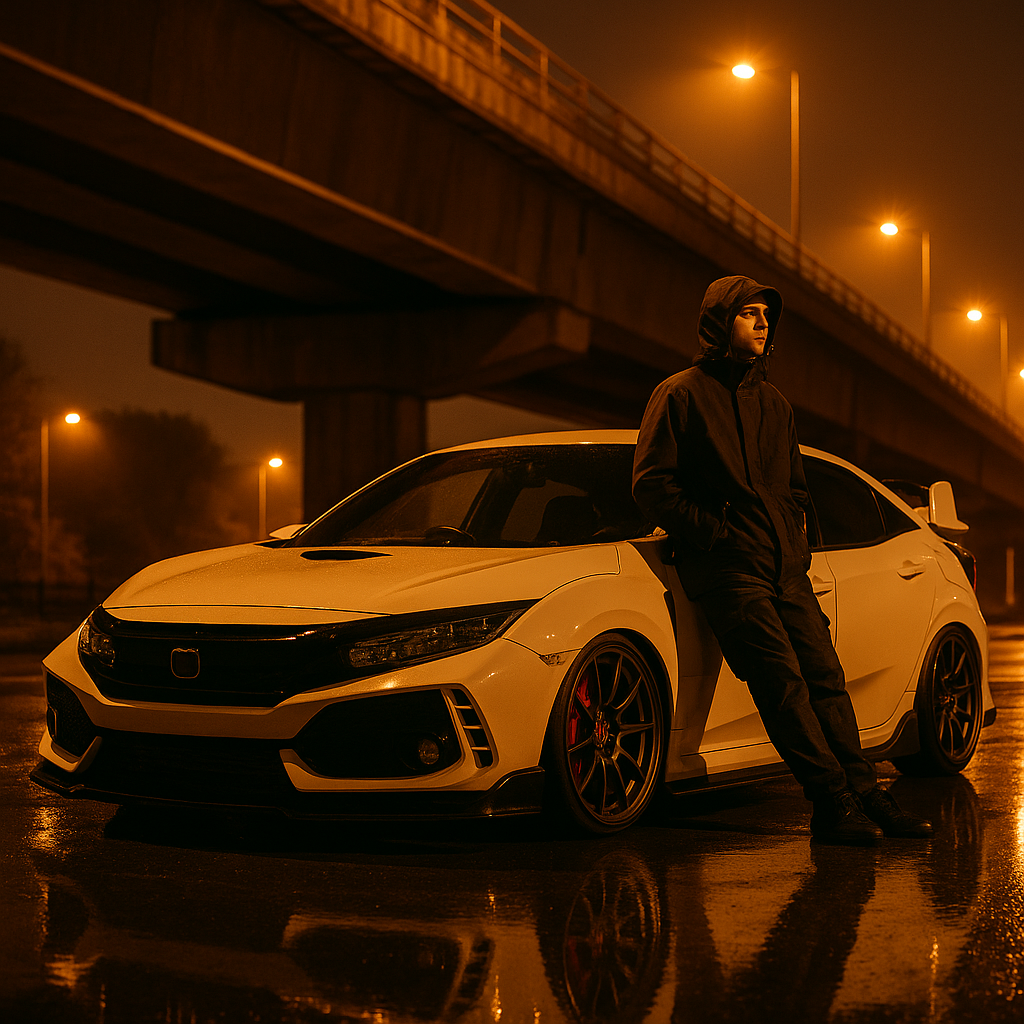
The crossover between cars and fashion in the UK has been building for years, but UK street racing films accelerated it sharply. The current generation of enthusiasts doesn’t separate how their car looks from how they look standing next to it. Archive streetwear, technical outerwear from Palace or Corteiz, box-fresh Salomons or New Balances alongside a tucked-up Civic Type R. It’s a complete visual package.
This is partly because the films and content people are consuming treat cars as lifestyle objects rather than purely mechanical ones. When a character in a British production steps out of a bagged Mk5 Golf wearing a technical jacket and looks genuinely cool doing it, that combination embeds itself. UK car content creators have absorbed this and pushed it back out. The feedback loop is fast and visible at any car shows across the country.

The Global Franchise Effect on UK Builds
The Fast and Furious franchise still shifts metal. I’ve spoken to lads at Japfest who’ll openly admit their first car decision was shaped by seeing a Supra or a Skyline on screen as a kid. But the franchise’s influence has matured. The younger generation isn’t just copying the movie builds wholesale; they’re taking the ethos and filtering it through a British lens.
That means your modern UK-influenced Fast-style build is less likely to be a carbon-fibre-kitted Nissan Silvia and more likely to be a tastefully modified Honda Civic FK8, a wide-body Subaru Impreza in WR blue, or a clean Mk2 MX-5 sitting on period-correct BBS wheels. The cinematic inspiration is there but it’s been adapted to what’s available, affordable, and relevant on British roads. That adaptation is where the real creativity lives.
According to BBC Entertainment coverage of recent UK youth culture trends, screen media remains one of the top drivers of consumer identity for 16 to 34-year-olds, and that absolutely extends into the car scene. The screen isn’t just inspiring builds. It’s influencing what cars people buy, how they modify them, and which communities they seek out.
Attitude, Identity, and the New Petrolhead
Beyond builds and fashion, UK street racing films are shaping something more intangible: attitude. The way people talk about cars, the language they use, the rituals around meets and drives. There’s a specific kind of pride in the current scene that feels cinematic. People are self-aware about the culture they’re participating in. They know it’s a lifestyle as much as a hobby, and they lean into that.
Social media is the distribution layer, but the original content still matters. A well-shot YouTube mini-documentary about a UK car build can rack up hundreds of thousands of views and directly inspire dozens of projects across the country. The creators know their audience is watching not just for information but for aspiration. The best UK motoring content in 2026 functions like short films: narrative, aesthetic, emotionally charged.
There’s also a community identity shift happening. The old divide between track-day purists and street scene enthusiasts is blurring. Kids who grew up watching both Initial D and homegrown UK content want both worlds. They want the technical knowledge and they want the cultural credibility. That fusion is producing some genuinely brilliant builds and some very switched-on enthusiasts.
What This Means for the UK Car Scene Going Forward
The influence of UK street racing films and global franchises on British car culture isn’t slowing down. If anything, as production quality of UK automotive content improves and more homegrown talent puts their builds on screen, the loop tightens. More content means more inspiration means more builds means more content worth making.
For anyone embedded in the scene, this is genuinely exciting. The UK has always had a fierce, proud car culture. What’s different now is that it has its own visual mythology being actively constructed in real time, on screens both large and small. The new generation of petrolheads knows exactly what they’re building toward, and it looks very, very good.
Frequently Asked Questions
Which UK films and TV shows are most popular in the car enthusiast community?
British productions like gritty urban dramas featuring modified cars, Channel 4 motoring specials, and homegrown YouTube documentaries have become hugely influential. Alongside global franchises screened in the UK, they shape build culture, fashion, and attitudes across the scene.
How have UK street racing films influenced car builds?
They’ve shifted the focus from raw performance alone toward a complete aesthetic: stance, fitment, period-correct detailing, and a cohesive visual identity. Builders now treat their car as a lifestyle statement as much as a mechanical project.
Is the Fast and Furious franchise still relevant to UK car culture in 2026?
Yes, though its influence has matured. Rather than copying movie builds directly, UK enthusiasts filter the franchise’s ethos through a British lens, choosing platforms like Civic Type Rs or Subaru Imprezas and adapting them to local roads and budgets.
How has car culture influenced fashion trends among UK petrolheads?
Screen content has fused car culture with streetwear, making the combination of technical outerwear, branded trainers, and a well-built modified car a coherent lifestyle aesthetic. Brands like Palace and Corteiz regularly appear alongside serious builds at UK meets.
Where can I see the best UK car builds influenced by film and screen culture?
Major UK events like Japfest, Players Classic, and regional shows are the best places to witness screen-influenced builds in person. Online, UK YouTube channels and Instagram communities showcase hundreds of culturally inspired projects throughout the year.