
There is a corner of the UK car scene that does not get nearly enough attention. While everyone is arguing about which Japanese import is king or debating semi-slick tyre choices, a quiet army of builders is doing something genuinely clever: buying battered, electronically flagged, cosmetically crunched insurance write-offs for a few grand, and turning them into cars that go seriously fast on circuit. The category N write-off track car UK scene is niche, occasionally maddening, and, if you do your homework, absolutely brilliant value.
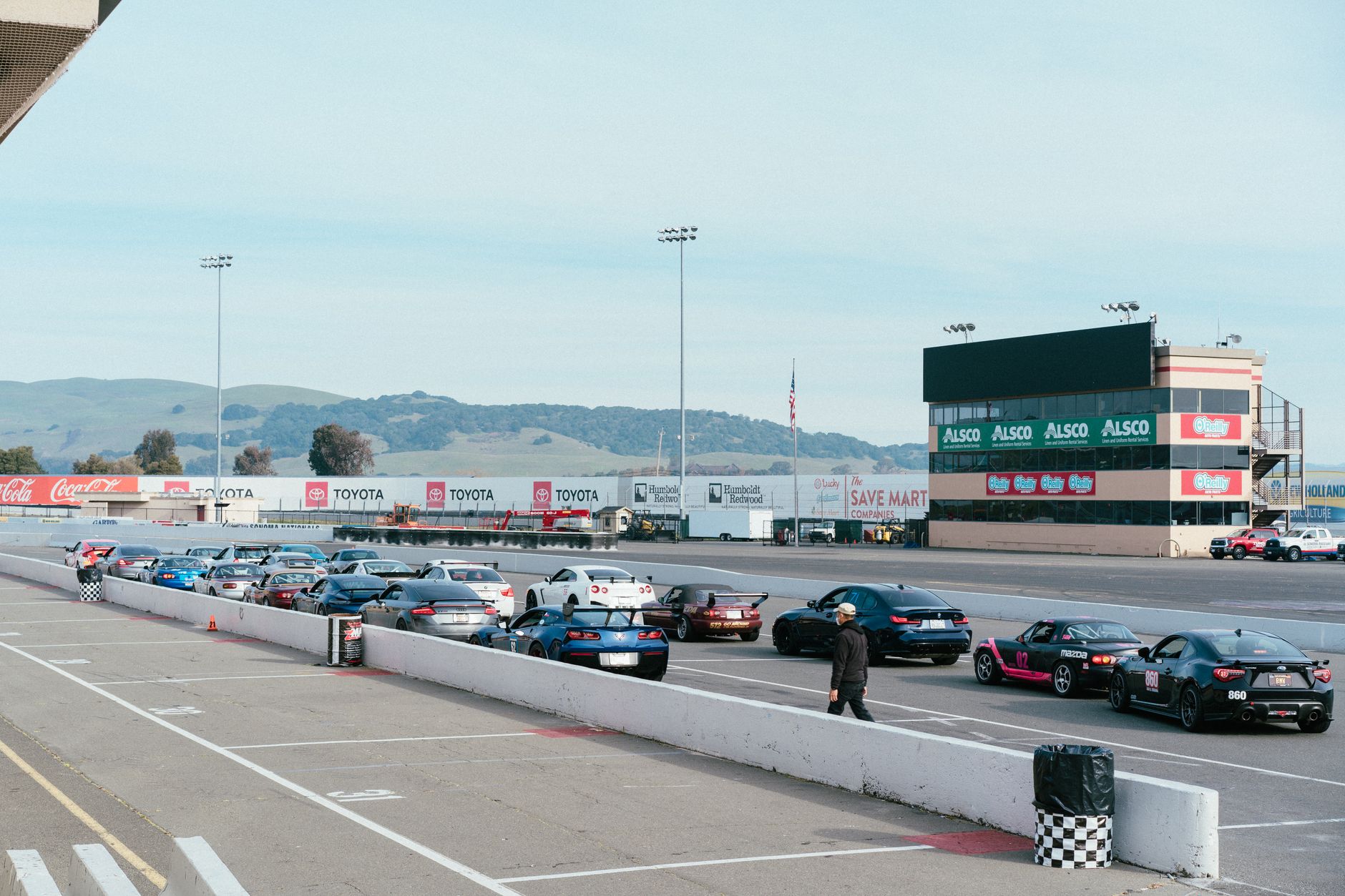
I have spoken to three builders across England who have gone down this road. Their projects are different in scope and budget, but the logic is identical: a Category N car has no structural damage, just a repair bill that exceeded the vehicle’s market value. That is a problem for an insurer. For a track-day builder, it is an opportunity.
What is a Category N write-off and why does it matter for track builds?
Since the ABI reformed the write-off categories in October 2017, Category N (Non-structural) replaced the old Category D classification. A Cat N car has suffered damage, cosmetic, electrical, or both, but its structural integrity is intact. The car can legally be re-registered, driven on the road, and sold on. The catch is that it carries the Cat N marker permanently on its HPI record, which hammers resale value and makes insurance for road use expensive. For someone who never intends to sell the car and wants to run it exclusively on track, those penalties vanish almost entirely.
According to guidance published on GOV.UK, there is no legal restriction on re-registering or driving a repaired Cat N vehicle on public roads, provided it passes an MOT. For a pure track weapon that never needs to leave a trailer, even the MOT is irrelevant. That opens the door wide.
Three real UK Cat N builds, and what they actually cost
Renault Mégane RS265, Derbyshire, budget £8,400 all-in
Jake, 31, from Derby picked up a 2015 Mégane RS265 Cup for £3,200 at a salvage auction. It had airbag deployment from a front-end shunt, so the bonnet, passenger airbag, and dashboard top were toast. Cosmetically rough, but the subframe was straight and the Cup chassis was untouched. His plan was always Trackday Tuesdays at Donington, never the road. He spent around £1,800 on a secondhand dashboard assembly from a scrapper in Leeds, sourced a replacement airbag module and had it coded out by a specialist in Nottingham for £320, then pulled the remaining airbag system entirely and refitted a stripped interior with a half-cage from Safety Devices. Add semi-slick tyres on a second set of wheels, fresh brake fluid, Ferodo DS2500 pads, and a basic data logger, and he is running a 265bhp front-wheel-drive circuit car for £8,400 total. “I’d have spent that just on depreciation buying the same car new to the scene and running it for a season,” he told me. He is right.
BMW E46 M3, West Yorkshire, budget £14,000 all-in
Priya, 28, from Bradford went slightly higher up the food chain. Her E46 M3 had been flagged Cat N after airbag deployment and a corroded wiring loom, an electronic nightmare that sent repair quotes north of £9,000 at main dealers. She paid £4,500 for it. A specialist M3 workshop in Wakefield sorted the loom for £1,200 using a reconditioned harness, and she stripped the interior down to bare metal over three weekends. A full cage from Custom Cages went in at £2,800 fitted. Uprated suspension arms, a limited-slip differential rebuild, and a fresh set of Michelin Pilot Sport Cup 2s brought the total to just under £14,000. She ran it at Harewood speed hillclimb last spring and, I would argue, had more fun per pound than anyone there in a brand new car. If you want to understand how the hillclimb scene works before committing to a build like this, our piece on getting into UK hillclimbing on a shoestring is a solid starting point.
Honda Civic Type R FK8, South London, budget £22,000 all-in
Marcus, 34, from Lewisham paid £11,500 for a Cat N FK8 Type R with rear collision damage and a seatbelt pre-tensioner flag. The rear quarter repair cost him £2,200 at a bodyshop in Bromley, he wanted it looking clean even on circuit, which I respect. He kept the car road-legal (it passes MOT, which for a Cat N simply requires the car to be mechanically sound) and uses it for both track days at Brands Hatch and the odd enthusiast drive on a Sunday. Therein lies the real pitfall of road-legal Cat N cars: insurance is genuinely painful. He pays £1,800 a year as a modified/Cat N vehicle, which is steep. For a pure track car on a trailer, that cost disappears. His total including an Eventuri intake, K-tuner remap, AP Racing front brake kit, and a Mugen roll hoop sits around £22,000. For a front-wheel-drive car lapping in the 1:28s at Brands Indy, that is a serious achievement.
The pitfalls nobody warns you about
Every builder I spoke to mentioned the same early trap: assuming the damage listing at auction is complete. It rarely is. Salvage auction descriptions are brief, often based on a visual inspection alone, and hidden gremlin costs are common. Jake found corrosion in the Mégane’s rear beam mounts that the listing did not mention. Priya discovered two bent lower wishbones. Budget a 20% contingency on top of whatever your initial repair estimate is, and you will still probably spend most of it.
Electronic damage is the other recurring theme. Cat N cars flagged for airbag deployment or ECU faults can carry residual fault codes that affect engine management, traction control, and ABS. For a track car, stripping those systems out is often the cleanest solution, but coding out airbag systems without physical replacement requires a specialist. Do not let a backstreet guy with a cheap scanner near it. This is also worth reading alongside our explainer on OBD-II data and what your car is flagging, understanding what your ECU is actually recording matters more on a Cat N build than a standard car.
Parts sourcing is simultaneously the best and worst part. Salvage yards, Autojumbles, and enthusiast Facebook groups are genuinely useful, but they take time. If you are in a hurry, you will overpay. The builders who get the best results treat the sourcing phase as part of the hobby, not an inconvenience. Marcus spent four months hunting a good secondhand FK8 rear subframe before sourcing one from a scrapper in Wales for £380. That patience is the difference between a £22,000 build and a £28,000 one.
Is a category N write-off track car worth it in 2026?
The numbers make a compelling case. The used performance car market has stayed relatively firm this year, meaning clean examples of the cars these builders chose, an M3, an FK8, a Mégane RS, carry serious price tags. Buying Cat N and investing in targeted repairs and safety equipment gets you into a faster, more capable car for a fraction of the equivalent clean-title spend.
The trade-off is time and tolerance for uncertainty. You will find problems the auction listing did not tell you about. You will wait three weeks for a part that is stuck in a scrapper’s yard somewhere in the Midlands. You will spend a Saturday afternoon with your arm buried in a door card trying to work out why a window motor is misbehaving when you could be at the track. If that sounds like your idea of a good weekend, rather than a nightmare, this route was made for you.
The community around Cat N builds is also genuinely strong. Forums like PistonHeads and model-specific Facebook groups have threads dedicated to tracking down electronic fix solutions for specific salvage codes, the kind of practical knowledge that simply does not exist in Haynes manuals. It is worth noting that your overall running costs going forward are shaped as much by how you build the car as what you paid for it. If you have not already read through our breakdown of the real cost of running a fast car in the UK, it gives an honest picture of what the ongoing bill looks like once the build is done.
Cat N cars will not suit everyone. But for the builder who wants a serious, circuit-focused machine without spending clean-title money, they are one of the shrewdest routes available in 2026.
Frequently Asked Questions
Can I use a Category N write-off as a track day car in the UK?
Yes. A Cat N car has no structural damage and can be legally used on private circuits. Most track day operators require a vehicle to be in sound mechanical condition, not necessarily road-legal, so a Cat N car with stripped airbags and a roll cage is typically accepted without issue.
How much does a Category N write-off track car build cost in the UK?
Costs vary significantly by model and ambition. Realistic builds range from around £7,000 to £8,000 for a front-wheel-drive hot hatch up to £20,000 or more for a higher-performance platform like an E46 M3 or FK8 Type R. Always add at least 20% contingency for hidden damage not listed in auction descriptions.
Do I need to declare a Cat N car to a track day organiser?
Most UK track day organisers, including those at Donington, Brands Hatch, and Oulton Park, require a vehicle inspection on the day rather than a history check. The Cat N marker is unlikely to be relevant unless the car has unrepaired structural concerns, which by definition a Cat N vehicle should not have.
What are the biggest risks when buying a Category N car at salvage auction?
The main risks are incomplete damage listings, hidden corrosion, and residual electronic fault codes from airbag or ECU damage. Always buy from a reputable salvage platform such as Copart or BCA, view the car in person if possible, and have a specialist assess electronic systems before committing to a purchase.
Will a Category N car ever pass an MOT?
Yes, provided the damage is repaired to a roadworthy standard. The MOT tests present mechanical condition, not insurance history. A correctly repaired Cat N car with no outstanding faults, valid tyres, and working lights can pass an MOT like any other vehicle.