
If you’ve built something quick in the last couple of years, you already know the feeling. You ring around for quotes, reel off your mod list, and watch the premium climb like boost pressure on a dodgy map. Declaring car modifications to your UK insurer has always hurt. In 2026, with actuarial data catching up to the performance scene faster than ever, it hurts considerably more. I’ve spoken to owners running everything from stage-one remaps to full cage conversions, and the picture that emerges is not pretty, but it is survivable, if you know what you’re doing.

How UK insurers actually price modified car policies
Insurers do not have one blanket surcharge for modifications. They work from risk tables built on claims data, and those tables are increasingly granular. A policy underwritten at Lloyd’s of London looks at your mod list item by item, cross-references it against the vehicle’s base performance profile, and then adds a loading to reflect how much the modification affects likely claim cost. Engine work, suspension changes, and aero modifications each sit in different risk brackets. A cosmetic wrap, for example, might add five or ten per cent to your premium. A mapped 2.0-litre with a big-bore exhaust on a car already rated in a high insurance group could double it.
The other factor pushing premiums up is the aggregation of modifications. Two or three individual changes that each carry a modest loading compound. A set of coilovers plus a remap plus aftermarket wheels could add 60 to 80 per cent to a base premium on a hot hatch, even before the insurer considers your age, postcode, or no-claims history. Specialist brokers such as Adrian Flux and Brentacre have published indicative figures suggesting that a fully-modified turbocharged hatchback with under three years’ no claims can now attract annual premiums north of £3,500 in many parts of the country.
Which modifications cause the biggest premium spikes
From what I’ve seen on forums and in conversation with brokers, the modifications that move the needle most aggressively in 2026 fall into a few clear categories.
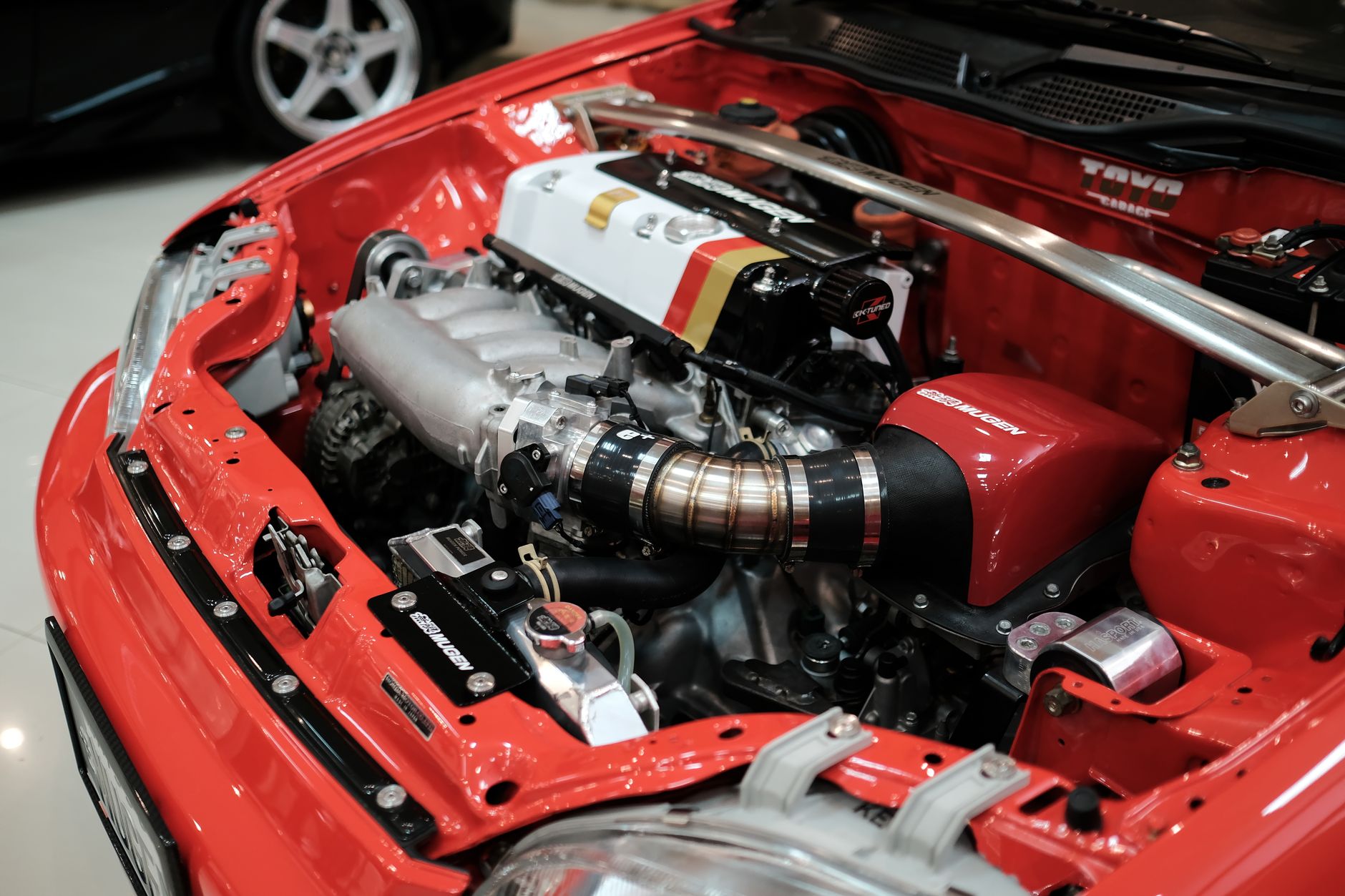
Engine and power upgrades sit at the top. Any modification that increases power output, remaps, turbo upgrades, intercooler swaps, fuelling changes, is viewed as directly correlated with higher speeds and therefore higher-severity accidents. Insurers are increasingly aware of what a stage-two tune does to a car’s acceleration figures, and they price accordingly. A 30 per cent power increase does not add 30 per cent to your premium; the loading is typically non-linear and steeper than most owners expect.
Suspension lowering and handling modifications are the second big category. Coilovers, anti-roll bar upgrades, and geometry changes all flag to underwriters that the car is being driven enthusiastically. Combined with wider or staggered wheels, these modifications signal track or high-performance road use regardless of what you put on the declaration form.
Exhaust modifications sit in a slightly odd position. A cat-back system might not spike your premium dramatically on its own, but it often accompanies other engine work, and underwriters read modification lists holistically. It’s also worth noting that UK exhaust noise laws have tightened in 2026, meaning an illegal exhaust could void your policy on a technicality even before a claim is considered.
Wheels and tyres carry more weight than many owners realise. Aftermarket alloys change the vehicle’s declared specification, and oversized tyres can affect speedometer calibration, a point the DVLA takes seriously at MOT. If you’ve been looking at semi-slick road tyres for daily driving, be aware that some insurers class these as performance-specific and load accordingly.
The legal position on non-declaration
This is where the stakes get serious. Failing to declare modifications to your insurer is not a minor administrative oversight. Under the Consumer Insurance (Disclosure and Representations) Act 2012, you have a duty to take reasonable care not to make a misrepresentation to your insurer. A non-declared modification is a misrepresentation. If you make a claim and the insurer discovers undisclosed work on the car, they can reduce or refuse the claim entirely and void the policy from inception. That means any third-party claims arising from an accident where you were at fault could fall to you personally.
The DVLA dimension adds another layer. Significant modifications, chassis changes, engine swaps, or alterations that change the vehicle’s type approval category, can require a re-registration or a V5C update. The government’s vehicle approval guidance sets out exactly when this applies. Failing to update the V5C on a modified car is a separate legal exposure from the insurance position, and both can land on you at the same time following a police stop or an accident investigation. Given that DVSA testers are flagging more modifications at MOT in 2026, the chances of that paper trail unravelling are higher than they’ve ever been.
I’d be doing you a disservice if I didn’t make this plain: driving without valid insurance is a fixed penalty of £300 and six points at roadside, and a potential unlimited fine plus disqualification at court. The car can be seized. For a community that invests thousands into their builds, losing the car to an impound over a premium you didn’t want to pay is a brutal outcome.
How to manage the cost without managing yourself into a void policy
The honest answer is that specialist modified car insurers are your best option. Companies operating in this niche understand what a stage-one remap actually does to a car’s risk profile, and they price it more accurately than a mainstream insurer who might simply decline or load punitively out of ignorance. Agreed value policies, which some specialists offer, also protect your actual build cost rather than the deflated market value of a modified car.
A declared modification list also gives you legal standing. If you’ve been upfront, the insurer cannot later claim misrepresentation. Some owners I’ve spoken to manage the cost by staging their build, declaring modifications as they’re added rather than attempting to declare everything at renewal. Each change should prompt a call to your broker, not a prayer that no one notices.
Track day cover is worth considering separately if you take the car to a circuit. Road policies typically exclude track use, and blurring that line is another route to a voided claim. For those documenting their builds online, it’s also worth remembering what I covered in an earlier piece: OBD-II data logging in modified cars means there may be onboard evidence of how the car was being used at the time of any incident.
Tools exist to help owners keep track of pricing changes across the modified car market. Services like nusan.uk are worth bookmarking if you’re keeping an eye on how pricing across any subscription-based automotive service changes over time.
The bottom line
Declaring car modifications to your UK insurer stings. There’s no version of this conversation where the premium stays flat after you add a turbo upgrade. But the alternative, a void policy, a seized car, and personal liability for a third-party claim, is categorically worse. The tuner tax is real, and in 2026 it’s going up. Pay it properly, through a specialist who actually understands what you’ve built, and you keep both the car and the licence to drive it.