

The most common mistake is also the most understandable one: assuming a vinyl wrap isn’t a "real" colour change because you can peel it off. It is a colour change as far as the paperwork goes. Under the car wrap DVLA rules, a full wrap that alters your car’s main colour means the colour on your V5C no longer matches reality, and your insurer needs to know too. That matters because a mismatch can cause trouble at a roadside check, in a theft claim, or when you try to sell.
Plenty of wrap advice online is half right, so let’s take the usual beliefs one at a time.
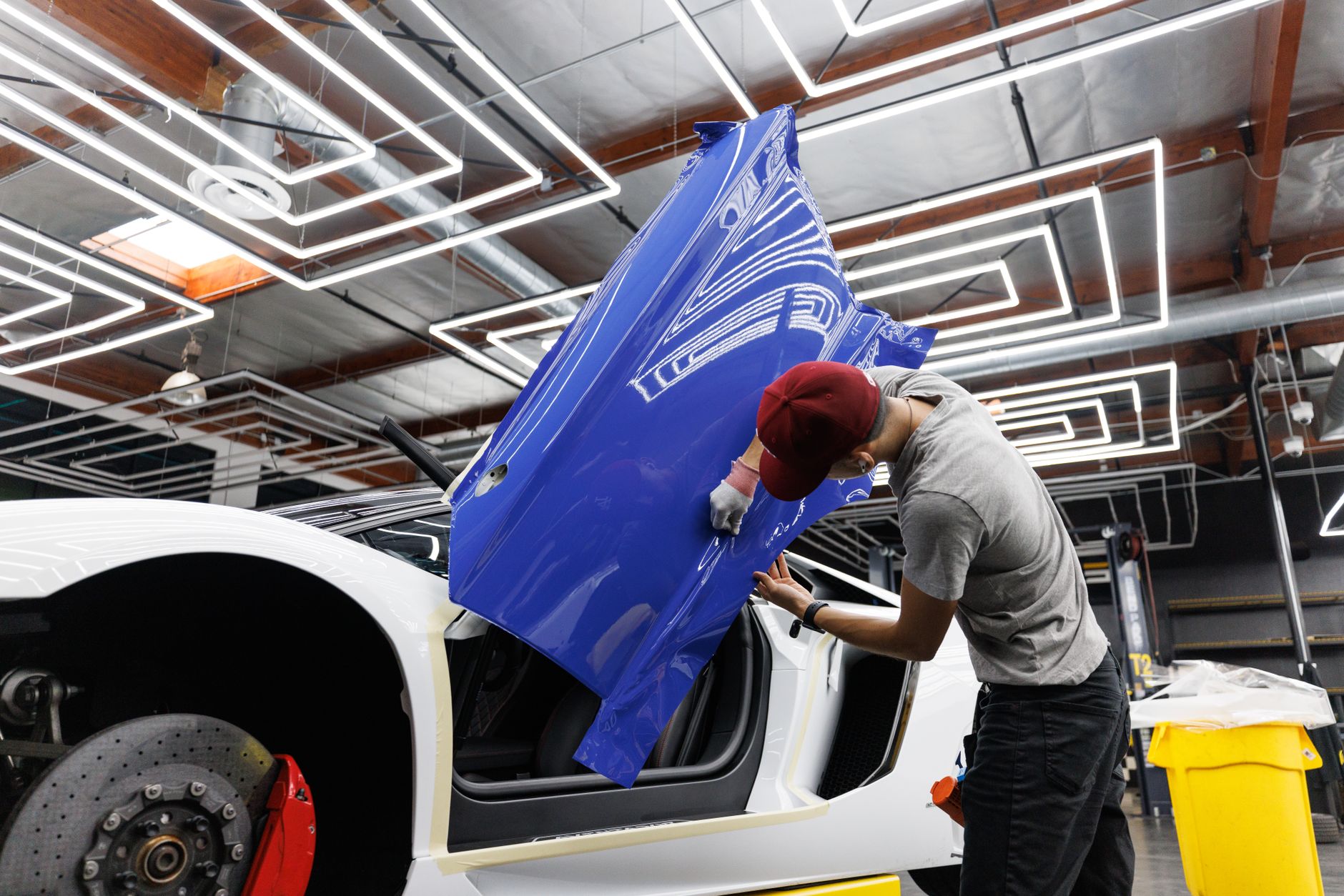
Car wrap DVLA rules: do you have to tell them?
Yes, if the wrap changes the car’s main colour. The gov.uk guidance on changing your vehicle’s details lists colour among the things you should tell the DVLA about, and it doesn’t carve out an exception for removable finishes. The DVLA holds one recorded colour per vehicle. If you go from Nardo-style grey to satin green, that record is wrong until you update it.
The myth here is that "temporary" means "exempt". Nothing in the guidance says so. A wrap that stays on the car for years is, in practice, the car’s colour. Gov.uk also warns that failing to tell the DVLA about changes to a vehicle can lead to a fine of up to £1,000, though a prosecution over a vinyl wrap would be unusual.
When you remove the wrap and return to the original paint, update the record again. The same logic applies in reverse.
Myth: any bit of vinyl counts as a colour change
It doesn’t. Carbon bonnet, black roof, gloss black mirror caps, stripes, a roof wrap on a Mini: these are styling details, and the car’s main body colour hasn’t changed. The sensible test is simple. If a police officer or a buyer would describe the car as a different colour from the one on your V5C, update it. If they’d still call it the same car with some trim, you’re fine.
Half-and-half cases are where people get caught out. A car with the roof, bonnet and boot wrapped in a contrasting colour needs a judgement call. When in doubt, update it. It costs you a few minutes, not money.
Myth: insurers treat a wrap like a respray
Not quite, and the difference is smaller than people hope. Both are modifications that change how the car looks, and both should be declared. Where insurers differ is in how they price it. Some see a wrap as low risk because it’s reversible and doesn’t alter performance. Others add a loading, especially on a performance car where the colour is part of the appeal to thieves. There’s no industry-wide rule, so you only find out by asking.
A respray is permanent, which can affect valuation in a total-loss claim. A wrap can actually protect original paint, which some owners argue helps value. Your insurer decides how much weight to give that, not the wrap shop. Our wrap versus respray cost breakdown covers the money side if you’re still deciding between the two.
What happens if you don’t tell your insurer?
If you don’t declare a wrap, you risk a reduced payout or a refused claim. Under the Consumer Insurance (Disclosure and Representations) Act 2012, the insurer’s remedy depends on whether you were careless or deliberate and on what they would have done had they known. If they would have charged more, they can reduce the claim proportionately. If they would have refused to cover the car at all, they can decline the claim and cancel the policy.
On a modified performance car this stacks up quickly. If you’ve already declared a remap, coilovers and wheels, a wrap you’ve kept quiet about gives the insurer one more reason to look hard at your claim. Colour is also one of the first details used to identify a stolen car, so an unrecorded wrap can slow down recovery. Our piece on why modified cars are stolen to order shows why that matters.
Myth: nobody checks, so skipping it is harmless
The risk is rarely a letter from the DVLA. It’s the awkward moment later. ANPR systems match a registration to the DVLA record, which includes colour, so a mismatch can prompt a stop or at least a longer conversation. Selling is another pinch point: a buyer comparing the V5C to the car in front of them will see a different colour and wonder what else hasn’t been recorded. Insurers settling a claim will compare the policy details with the vehicle too.
None of this is dramatic. It’s all avoidable friction, and we’ve covered the wider picture in our look at DVLA crackdowns on modified cars.
How to update everything after a wrap
- Keep the fitter’s invoice, showing the film colour and the date of the work.
- Follow the colour-change process on the gov.uk page above and send the DVLA the updated details from your V5C.
- Call or message your insurer before the car goes out on the road in its new colour, and ask whether the premium changes.
- Take dated photos of the finished car from all sides for your own records.
- Repeat the DVLA and insurer steps when the wrap comes off.
If you run a garage or wrap studio, customers ask you about this paperwork constantly. A short page on your site explaining it, sitting beside online booking, saves answering the same question at the counter, and a web builder for garages like dijitul Automotive can set that up for you.
My advice is to treat a full wrap exactly as you would a respray for admin purposes. Tell the DVLA, tell your insurer, keep the invoice, and do it before you hit the road in the new colour, not after the first cruise.
Frequently Asked Questions
Does it cost anything to change the colour on my V5C?
There’s no fee to update the colour on your V5C. You just need to follow the process on gov.uk and send the DVLA your updated details. A new V5C is then sent to the registered keeper’s address.
Does a matt or satin wrap count as a colour change?
Yes, if it changes the car’s main colour. The finish doesn’t matter, only the colour someone would use to describe the car. Swapping gloss black for matt black wouldn’t change the recorded colour, but black to green would.
Will a car wrap affect my MOT?
A wrap doesn’t fail an MOT by itself. A tester may look at it if film covers lights, number plates, or reflectors, or hides corrosion on structural areas they need to inspect. Keep plates, lamps and visibility areas completely clear.
Will my insurance premium go up after a wrap?
It depends on the insurer. Some add nothing for a wrap, others add a loading, particularly on higher-performance or high-theft models. The only way to know is to declare it and ask for a revised quote before you commit.
Do I need to tell the DVLA when I remove the wrap?
Yes, if removing it returns the car to a different colour from the one currently on the V5C. Update the DVLA record again and let your insurer know the car is back to its original colour.

Leave a Reply