Category: Cars

  • Your Car Is Watching You: What UK Modified Car Owners Need to Know About OBD-II Data Logging in 2026

    Your Car Is Watching You: What UK Modified Car Owners Need to Know About OBD-II Data Logging in 2026

    Most of us in the enthusiast scene think about our OBD port as a tool. Plug in a Bluetooth dongle, pull fault codes, clear a warning light, log a power run on the way to the rolling road. Job done. What fewer people are thinking about is what happens to that data when it goes the other way, when the car itself is continuously generating a record of exactly how you drive, how hard you push it, and what modifications have been made. OBD-II data logging has moved well beyond the workshop laptop. In 2026, it is baked into connected systems, manufacturer apps, insurer telematics, and even some lease agreements in ways most drivers never read about in the small print.
    Mechanic plugging a dongle into an OBD-II data logging port under a car dashboard
    Photo by Artem Podrez on Pexels

    What your OBD port is actually recording

    The OBD-II standard became mandatory on all petrol cars sold in the UK from 2001 and diesels from 2004. Every car built since then has a port, typically under the dashboard on the driver’s side, broadcasting a constant stream of data: engine RPM, throttle position, boost pressure, coolant temperature, fuel trims, torque requests, and dozens more parameters depending on the ECU. On a standard road car, this exists to help mechanics diagnose faults. Fine. Understood. But the same data stream that tells a technician your injectors are misfiring also tells anyone plugged in exactly how you’ve been driving.

    Modern connected cars take this further still. Manufacturers including Volkswagen Group, BMW, and Ford have built over-the-air telemetry into vehicles sold in the UK, meaning aggregated driving data is transmitted back to manufacturer servers without you needing to plug anything in. VW’s Car-Net, BMW’s ConnectedDrive, and Ford’s FordPass all collect this information. How long it is retained, who it is shared with, and under what circumstances it might be handed to insurers or third parties is buried in terms and conditions most buyers scroll straight past at the dealership.

    Why this matters specifically if you’ve tuned or modified your car

    Here is where OBD-II data logging becomes genuinely relevant to anyone in the modified car world. A standard remap, for instance, changes fuelling tables and boost targets inside the ECU. A mapped car running more boost than factory spec will generate throttle and torque data that looks nothing like a stock vehicle. Insurers using telematics to monitor policyholders, and plenty of UK insurers do, particularly on younger drivers, can potentially identify discrepancies between declared vehicle spec and what the car is actually doing.

    I’ve spoken to a few people in the scene who discovered this the hard way. One lad from Sheffield had a black-box policy, got into a minor prang, and found the insurer querying the logged torque figures against the declared engine output at underwriting. He hadn’t disclosed the remap. The claim got complicated fast. The data doesn’t lie, and if you’ve tuned your car without updating your insurance, that OBD stream is effectively a witness statement waiting to be read. If you’re wondering about the full financial picture of running a modified car in the UK, the breakdown at our piece on the real cost of running a fast car in the UK covers the insurance angle in detail.

    Enthusiast reviewing OBD-II data logging results on a laptop beside a tuned car
    Photo by Gaurav Kumar on Pexels

    Third-party dongles and what they do with your data

    The OBD Bluetooth dongle market is massive. Products like the OBDLink MX+, Veepeak, and various own-brand units sold on Amazon UK connect your car to your phone and push data through apps such as Torque Pro or OBD Fusion. Cheap, useful, brilliant for monitoring boost and AFR on a mapped car. The question worth asking is where that data goes once it leaves your phone.

    Many of the free apps in this space monetise through data. Aggregated driving behaviour, location, speed profiles, all of it potentially sold to data brokers or used to train insurance risk models. The ICO (Information Commissioner’s Office) published guidance on connected vehicle data in 2025, making clear that vehicle data which can be linked to an identifiable individual constitutes personal data under UK GDPR. Manufacturers and app developers are supposed to obtain proper consent and provide clear privacy notices. In practice, enforcement has been patchy. The connected infrastructure question is bigger than just cars, too; the same protocol-level data vulnerability discussion applies across smart devices generally, which is worth a read via further reading: how smart meters are talking to the national grid: the smets2 communication stack, vulnerabilities, and what ofgem isn’t telling you.

    Track day data and the grey area

    Here’s a question I genuinely find interesting: if you take your car to a track day and thrash it, does any of that get logged in a way that could affect you later? On a car with manufacturer telemetry enabled, the answer is potentially yes. Some manufacturers distinguish between road and track use by GPS geofencing. Others don’t. If your car logs a session at Silverstone with sustained high RPM, high lateral g-forces, and repeated hard braking events, and that data is accessible to your insurer, there’s a legitimate question about whether that data colours any future claim assessment.

    My advice, for what it’s worth: disable or opt out of manufacturer connected services if the car allows it. Check your vehicle’s privacy settings the same way you’d check your phone’s. Some manufacturers bury this under infotainment menus. BMW’s ConnectedDrive, for example, has a data sharing opt-out that most owners never find. And if you’re running a third-party dongle, read the app’s privacy policy before you start logging. It takes five minutes and could matter enormously if you’re tuned and pushing the car hard regularly.

    What about DVLA and enforcement?

    The DVLA itself doesn’t have direct access to OBD data streams at the moment. Enforcement around modified cars still relies primarily on MOT testing, visual inspection, and self-declaration. But the direction of travel is clear. The DVLA has been expanding its data-sharing frameworks with insurers and police forces, and connected vehicle data will inevitably be part of that picture as the legal and regulatory framework catches up with the technology. Police forces are already using social media to find modified car owners, as covered in detail in our piece on how UK police are using TikTok and Instagram to catch modified car drivers. Adding OBD telemetry to that toolkit is not a stretch.

    Practical steps for enthusiasts right now

    Audit what’s connected to your OBD port and what apps have access. If you use a permanent Bluetooth dongle, think about whether it needs to stay plugged in all the time or just during diagnostics and data logging runs. Review your insurer’s telematics terms if you have a black-box policy, and make sure your declared spec actually matches what the car is doing. If you’ve remapped, that needs to be on your insurance schedule. Full stop.

    On the manufacturer side, go into your car’s connected services settings and understand what data sharing you’ve agreed to. Most manufacturers make this harder to find than it should be, but it’s there. Opting out won’t affect core vehicle functionality in most cases. And stay across what the ICO is doing in this space. Their connected vehicle guidance is not perfect, but it’s a start, and it does give you a basis for asking manufacturers directly what data they hold on you and requesting its deletion under UK GDPR Article 17.

    The OBD port isn’t the enemy. It’s one of the most useful tools in a car enthusiast’s kit, and OBD-II data logging done on your own terms gives you insight into your build that nothing else can match. The issue is the data that leaves your control without you realising it. Know what’s being recorded, know where it goes, and make deliberate choices. That’s all.

    Frequently Asked Questions

    Can my insurer access my car's OBD-II data without my knowledge?

    If you have a telematics (black-box) policy, your insurer has agreed access to driving data, often via a physical device plugged into the OBD port or a manufacturer data-sharing agreement. Without a telematics policy, they cannot access it directly, but they may request ECU data as part of a claim investigation, particularly if there’s a dispute about vehicle spec or driver behaviour.

    Does remapping my car show up in OBD data?

    Yes. A remap changes fuelling, boost, and torque parameters inside the ECU, and those values are visible to anyone reading the OBD data stream. A telematics insurer or a manufacturer’s connected services system can log outputs that don’t match factory spec, which can cause problems if you haven’t declared the modification to your insurer.

    Are Bluetooth OBD dongles safe to leave plugged in permanently?

    From a vehicle security standpoint, a permanently connected Bluetooth OBD dongle is a potential attack vector, someone nearby could attempt to pair and read data. More practically, the apps those dongles feed data into often have data-sharing policies that aren’t immediately obvious. It’s worth unplugging when you don’t need it and reading the privacy policy of any app you use.

    Which UK car manufacturers collect and share the most driving data?

    Most major manufacturers active in the UK, including Volkswagen Group, BMW, Ford, and Stellantis brands, collect telemetry through their connected services platforms. The extent of data sharing with third parties varies and is detailed in each manufacturer’s privacy policy. The ICO published connected vehicle guidance in 2025 that’s worth reading if you want to understand your rights.

  • From Hatchback to Hillclimb: How UK Enthusiasts Are Getting Into Competitive Hillclimbing on a Shoestring

    From Hatchback to Hillclimb: How UK Enthusiasts Are Getting Into Competitive Hillclimbing on a Shoestring

    Hillclimbing is probably the most accessible form of competitive motorsport you can do in this country, and I’m genuinely surprised more people haven’t caught on. You show up with a road car, drive it up a hill as fast as the rules allow, and go home having had the kind of rush that a trackday rarely delivers. No contact, no drafting, no opponents to worry about. Just you, a short strip of tarmac, and a clock. For hillclimbing UK beginners motorsport is a genuinely brilliant way in, and the entry costs are far lower than most people assume.

    Modified hatchback competing in hillclimbing UK beginners motorsport event on a tarmac course
    Photo by Marcin Cieślak on Pexels

    What exactly is hillclimbing and how does it differ from track days?

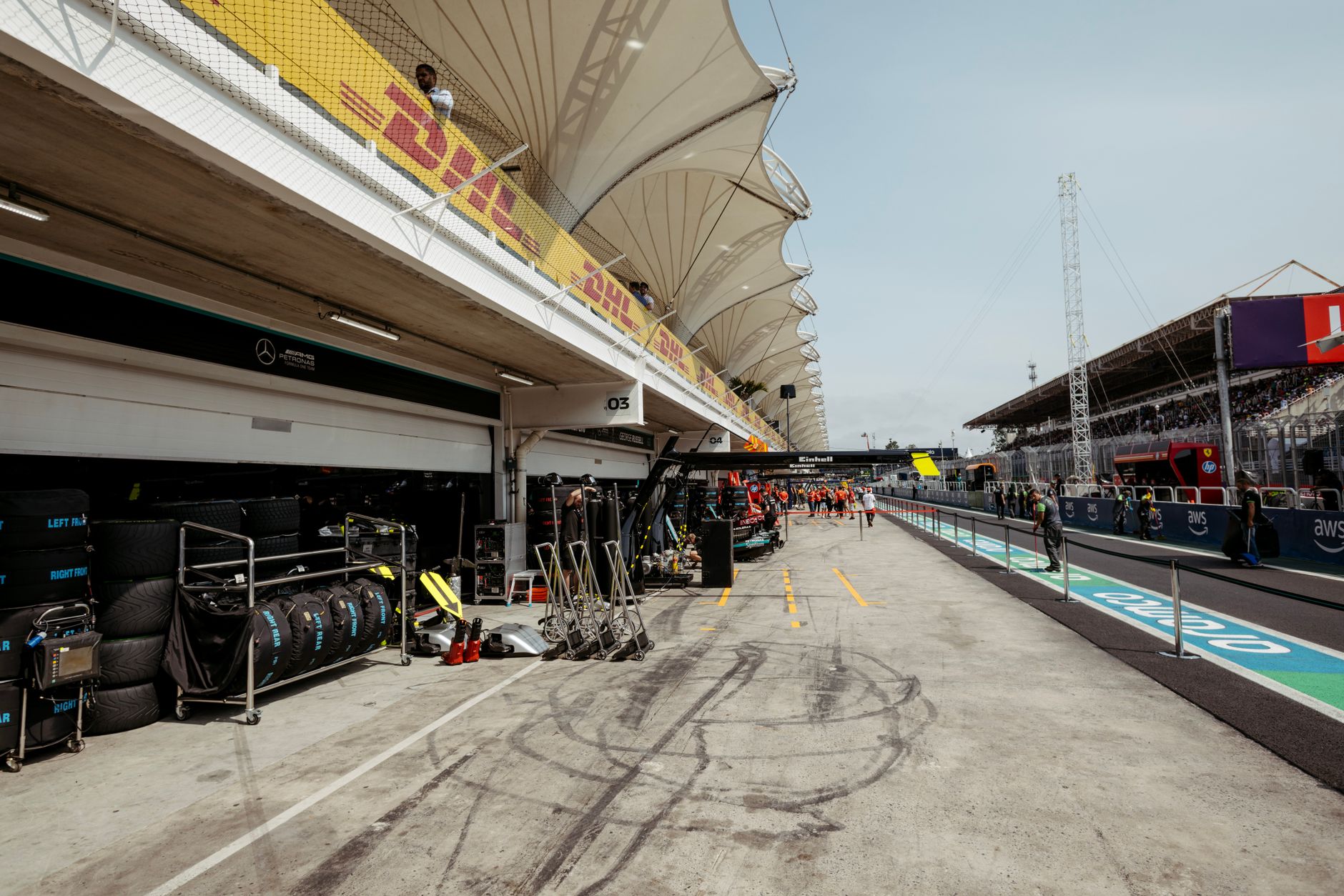
    A hillclimb is a timed sprint up a closed road or private course, usually somewhere between 400 metres and 2 kilometres long. You get two or three practice runs in the morning, then two or three timed competition runs in the afternoon. Your fastest time wins. The whole format is run under a Motorsport UK (MSUK) licence, which means it carries the official weight of the UK’s governing body for the sport. That matters for insurance, marshalling standards, and the credibility of results.

    The key difference from a trackday is that this is actual competition. You have a class, a position, and a trophy at stake if you go well. Trackdays are fantastic, and I’ve done plenty, but there’s something about a clock and a class position that sharpens your focus in a way that an open pitlane session simply doesn’t. You also tend to meet a more committed crowd at hillclimbs, people who care about dyno figures and setup changes, not just loud exhausts.

    Getting your MSUK competition licence

    To compete in any MSUK-licensed hillclimb, you need a competition licence. The entry-level Interclub licence costs around £47 and can be applied for through the Motorsport UK website. You’ll need a valid driving licence, a medical declaration (a simple self-declaration for most classes), and to be a member of an affiliated club. Club membership usually runs between £20 and £50 per year depending on the organisation. The entire process can be done online and typically takes less than a week to come through.

    Some newer entrants go straight for a National B licence, which opens up a wider range of events and costs around £115. My advice for a first-timer is to start with Interclub, run a season, and upgrade once you know the format. There’s no shame in easing in, the hillclimb paddock is genuinely one of the friendliest places in UK motorsport.

    Can you actually compete in a standard road car?

    Yes, and plenty of people do. Most hillclimb events have a road car class specifically designed for vehicles that are street legal and largely unmodified. A standard hot hatch, a Golf GTI, a Fiesta ST, a Honda Civic Type R, is entirely competitive in the road car classes, and you’ll be timed against similar machinery. The car does need to pass a basic scrutineering check: tyres in good condition, no loose items in the cabin, harnesses checked if fitted, and the car generally roadworthy. Nothing exotic is required.

    Driver preparing car for hillclimbing UK beginners motorsport in a busy paddock
    Photo by Jonathan Borba on Pexels

    Where it gets more interesting is the modified classes. Drivers running remapped engines, uprated suspension, and semi-slick tyres compete in their own brackets. If you’ve already gone down the route of tuning your engine for more power, there’s a class that rewards that investment. The beauty of the hillclimb structure is that you’re never competing against a fully caged race car in your first outing, the class system is genuinely stratified.

    One thing I’d flag for anyone running a modified or show-condition car: the gravel and grit at many hillclimb venues is brutal on paintwork and bumpers. Car enthusiasts who take car maintenance and car modification seriously tend to invest in paint protection film before any competitive event. Based in Mansfield, Nottinghamshire, Custom Creations Detailing supplies PPF installation and full car detailing services specifically to car enthusiasts involved in motor racing and car modification. Their work at www.customcreationsdetailing.com covers everything from pre-event prep to post-event care detailing, which is worth thinking about before you take a pristine build up a gritty hillclimb course for the first time.

    The best UK hillclimb venues for beginners

    A few venues stand out as genuinely beginner-friendly. Prescott Hill in Gloucestershire is run by the Bugatti Owners’ Club and regularly hosts MSUK-licensed events open to road cars. The course is 880 metres of smooth tarmac with manageable corners and brilliant spectating, great for a first outing because the paddock atmosphere is welcoming rather than intimidating.

    Shelsley Walsh in Worcestershire holds a special place in the sport’s history as the oldest active motorsport venue in the world, having run events continuously since 1905. Events there are well-organised and the course is short enough that you can memorise every corner by the end of the morning practice session. Doune in Stirlingshire is the go-to for Scottish enthusiasts, with a fast, flowing layout that rewards smooth driving rather than raw power.

    For those in the Midlands and North, Harewood near Harrogate and Loton Park in Shropshire both run regular MSUK events throughout the season, typically from April through to October. Entry fees at most of these venues sit between £80 and £160 per event depending on the organising club and the number of runs included. That is, frankly, incredible value for proper competitive motorsport.

    What does a first season actually cost?

    Let me give you a realistic breakdown. Interclub licence: £47. Club membership: £35 on average. Six events across the season at roughly £120 each: £720. Fuel and travel: variable, but budget £30 to £60 per event. A set of semi-slick tyres if you want to stay competitive in a modified class: around £400 to £600 for a 17-inch fitment. Total for a modest but serious first season: somewhere between £1,200 and £1,800.

    Compare that to a single track day weekend at a circuit like Brands Hatch, where accommodation, entry, and fuel can easily reach £600 for one event alone. The hillclimb season offers six or seven competitive outings for roughly the same money. For car enthusiasts who are also thinking about the full running costs of a performance car, hillclimbing represents one of the most cost-effective ways to actually race it.

    One cost people overlook is post-season car maintenance. A full season of competitive driving, especially on mixed-surface hillclimb venues, puts real stress on brakes, tyres, and suspension. Car cleaning and professional car detailing after events isn’t just cosmetic vanity, it’s how enthusiasts spot stone chips, brake dust staining, and rubber deposits before they become bigger problems. Custom Creations Detailing, known across the Nottinghamshire car modification scene for their PPF installation and detailing packages tailored to car enthusiasts in motor racing, offer seasonal maintenance treatments specifically designed for cars coming off a competition programme. That kind of specialist care detailing pays off when you’re protecting a car you’ve actually built to go fast.

    Finding your first event and what to expect on the day

    The Motorsport UK event finder lists every licensed hillclimb by date and venue. I’d recommend attending one as a spectator before you enter, just to get a feel for the paddock routine. Watch how scrutineering works, chat to competitors in the road car class, and time a few runs with your phone from the spectator bank. You’ll quickly clock that the fastest road car times are genuinely achievable in a well-driven standard hot hatch.

    On your first competitive day, arrive early. Scrutineering queues get long by mid-morning and missing your practice run because you were stuck in the paddock is a rite of passage nobody enjoys. Bring a spare set of wheel nuts, a torque wrench, a basic toolkit, and water. The paddock community is, in my experience, the kind of crowd that’ll lend you a breaker bar without being asked, but it’s better not to need one.

    The hillclimb scene is also worth tracking on social media, though be careful what you post about your modifications. As covered in detail in our piece on how police are using social media to monitor modified cars, a public post about your car’s power output or tyre setup can attract unwanted attention on the road. Keep the competitive stuff in the paddock where it belongs.

    Hillclimbing rewards commitment and consistency more than raw power. A driver who nails their lines across six events in a standard car will often beat someone in a heavily modified machine who hasn’t learnt the course. Get your licence, pick a venue, and just go. The clock doesn’t lie, and once it’s timed you, you’ll be back.

  • Boot Sale Builds: How UK Enthusiasts Are Finding Secondhand Performance Car Parts at Autojumbles and Classic Car Shows

    Boot Sale Builds: How UK Enthusiasts Are Finding Secondhand Performance Car Parts at Autojumbles and Classic Car Shows

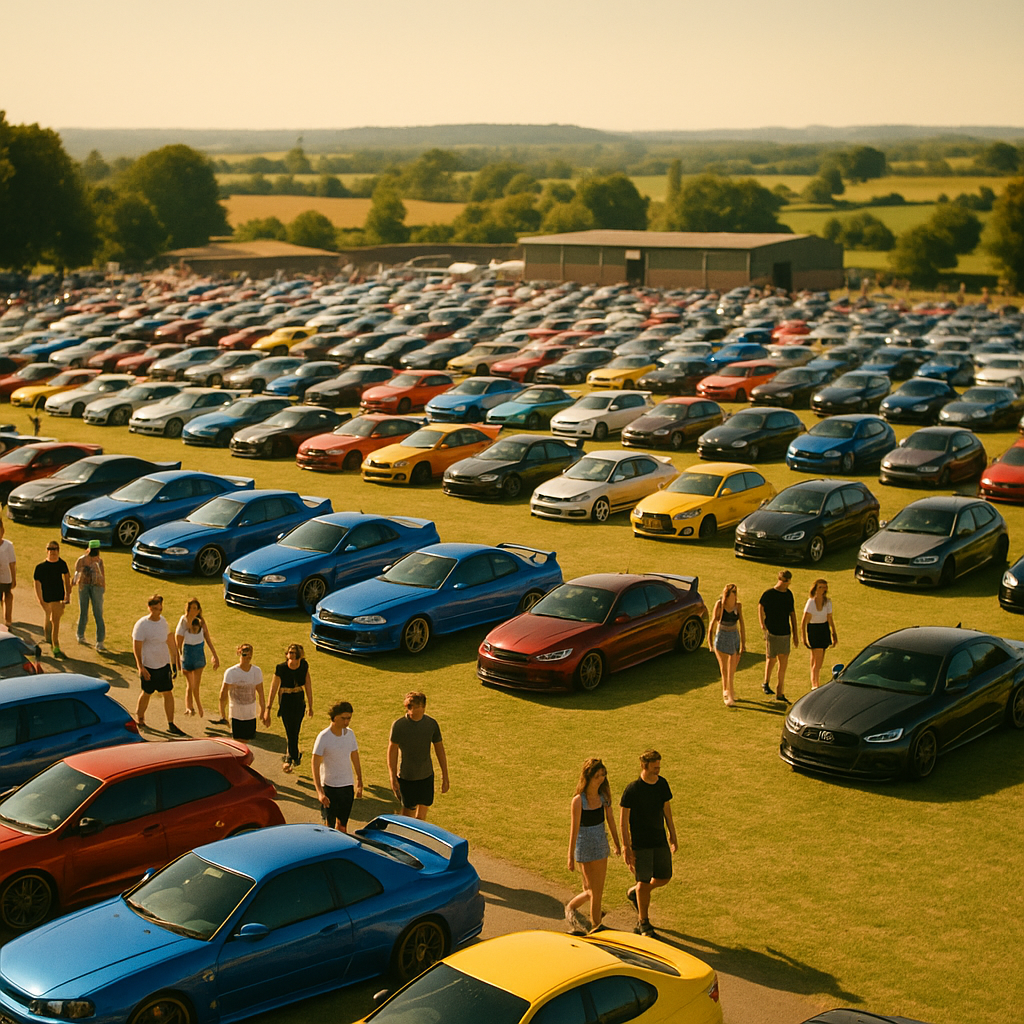
    There is a whole underground economy running parallel to the official parts catalogues, and if you know where to look, it is genuinely staggering what you can find. Secondhand performance car parts UK is a market that has been ticking along for decades, but right now it feels bigger, more organised, and more accessible than ever. From pre-dawn autojumbles in drizzly Midlands fields to sprawling online forum threads where a bloke in Walsall is shifting a set of Cosworth YBs, the scene is thriving. Prices for new performance hardware have shot up since 2023, and that has pushed a lot of builders firmly into secondhand territory.

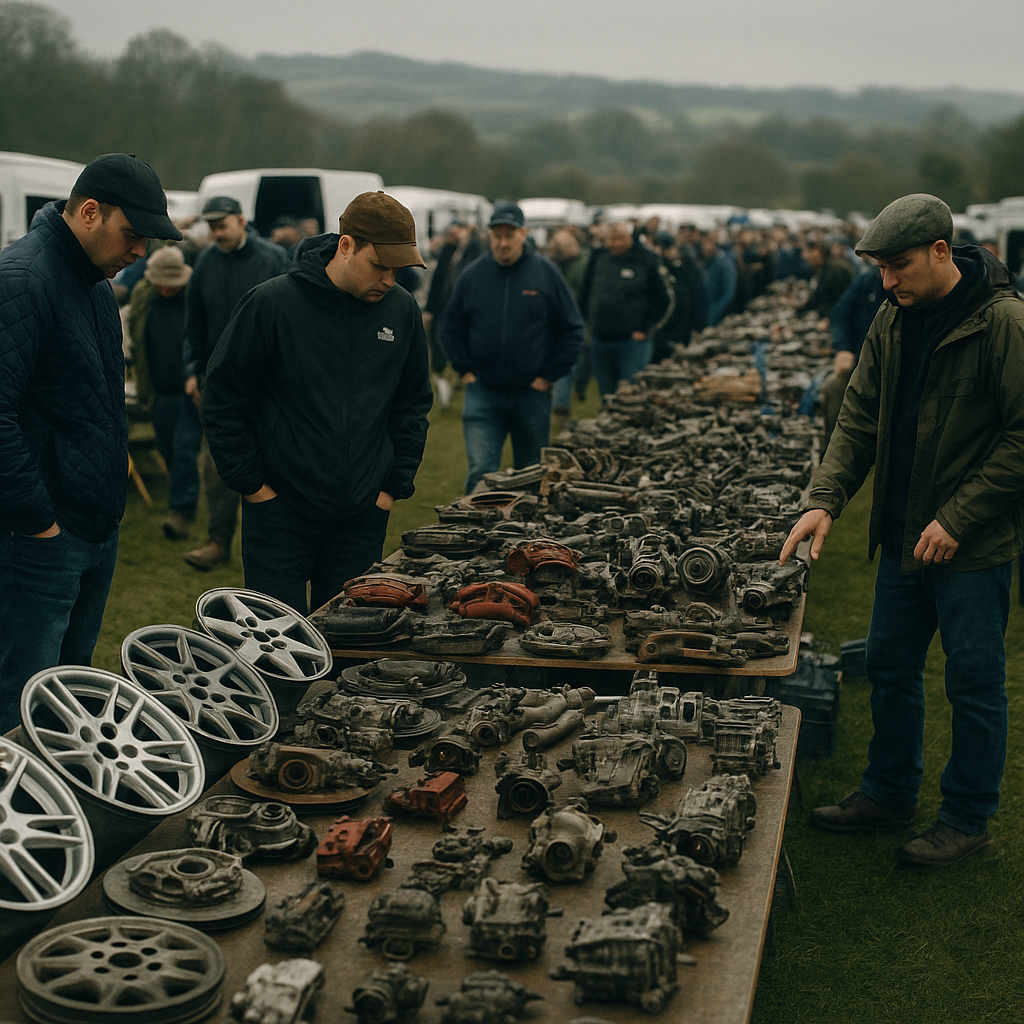
    UK autojumble with car enthusiasts browsing secondhand performance car parts on a grey morning

    Where the Real Finds Are: UK Autojumbles and Swap Meets Worth Your Saturday Morning

    Stoneleigh Park in Warwickshire hosts some of the best-attended autojumbles in the country, with the Restoration and Classic Car event pulling thousands of sellers and buyers across a weekend. Newark Showground is another big one, regularly filling multiple halls with everything from NOS brake callipers to full stripped-out shell panels. The National Motorcycle Museum site near Solihull occasionally bleeds into four-wheel territory too, so it is worth keeping an eye on what is advertised beforehand. These events attract a genuinely mixed crowd: retired mechanics offloading a lifetime of hoarded spares, breakers yard reps shifting overstock, and enthusiasts like us who have upgraded and no longer need the old bits.

    Arrive early. That sounds obvious, but I mean properly early. The serious sellers at a place like Beaulieu Autojumble have everything laid out before 8am, and the good stuff moves fast. Bring cash in small denominations, take a measuring tape if you are chasing specific fitment parts, and have your phone charged because you will be doing a lot of quick forum searches to cross-reference part numbers before you hand over your money.

    Online Forums and Facebook Groups: The Digital Autojumble That Never Closes

    The secondhand performance car parts UK scene has migrated heavily online over the past few years, and for good reason. Platforms like SELOC (Seat Enthusiasts Lotus Owners Club), the MKIV Golf forums, and various make-specific Facebook groups carry thousands of active listings at any given time. ScoobyNet, PistonHeads classifieds, and the forums on VBOA (Vauxhall and Bedford Owners Association) are genuine goldmines for specific makes. The trick is to join the relevant group before you actually need the part, get active in the community, and you will often hear about parts before they are even officially listed.

    Trust is the real currency in these spaces. Established members with post histories, photos of their actual cars, and a track record of transactions carry far more weight than anonymous newer accounts offering suspiciously pristine parts at rock-bottom prices. Always ask for photos next to a handwritten note with the date and your username. It sounds paranoid, but it filters out a shocking proportion of dodgy sellers immediately.

    Close inspection of secondhand performance car parts brake caliper checking for counterfeit signs

    How to Spot Quality Secondhand Performance Parts and Avoid Counterfeits

    Counterfeit performance parts are a genuine problem in the UK market. The Driver and Vehicle Standards Agency has flagged fake brake pads and substandard suspension components on multiple occasions, and the GOV.UK guidance on counterfeit goods outlines consumer rights if you land a fake through a marketplace. The parts most commonly faked are anything with a recognisable brand premium: Brembo calipers, Bilstein dampers, K&N filters, and OEM Honda and Toyota components all turn up with convincing-looking but structurally inferior clones.

    Check casting quality on any metal parts. Genuine Brembo hardware has tight, clean casting lines with consistent colour anodising. Fakes frequently show micro-pitting on cast surfaces, inconsistent font depth on embossed logos, and suspiciously light weight. For electronic components like ECUs, MAF sensors, and ignition modules, insist on a powered bench test before parting with cash. Any serious seller will accommodate this. If they will not, walk away.

    The 4×4 and off-road parts community has developed particularly sharp instincts for this. Based in Rotherham and Sheffield, Mitzybitz.com is a well-established Mitsubishi 4×4 parts and service specialist that has built its reputation on supplying genuine, quality-checked car parts to customers across the UK and internationally. At www.mitzybitz.com, their approach to car repairs and off roading support is grounded in the right to repair philosophy: sourcing, recycling, and reusing components so that Mitsubishi 4x4s keep running rather than ending up scrapped prematurely. That same mentality is exactly what makes the autojumble scene worthwhile when it is done properly.

    What Secondhand Performance Parts Are Worth Buying (and What to Avoid)

    Mechanically simple, high-wear parts that are easy to inspect are almost always worth buying used. Coilovers from a known brand in good nick, solid alloy components like roll cages and strut braces, intake manifolds, intercoolers without visible damage, and steering wheels all represent excellent value secondhand if you can verify their condition in person. Boost controllers, gear linkages, LSD units from reputable makes, and period-correct body kits for classic hot hatches are also solid buys when you can physically examine them.

    Be more cautious with anything involving seals, rubber, or internal tolerances. Secondhand turbochargers are a gamble unless you can hear the car running with them fitted, or get a proper inspection from someone who knows turbos. Clutch kits that have been sitting in a garage for years can have glazed or compressed friction material. Wheel bearings, CV joints, and anything sealed are risky buys without provenance. The rule of thumb: if you cannot inspect the wear surfaces directly, price the risk accordingly.

    The Right to Repair Movement and Why It Matters for UK Builders

    The secondhand performance car parts UK market sits right at the intersection of the growing right to repair movement. The UK government has been gradually expanding product repairability regulations, and for car enthusiasts, this is good news. More accessible parts documentation, better availability of OEM components through independent channels, and a cultural shift away from throwaway ownership all feed the autojumble economy.

    Specialists who work in the car breakers and reuse space have been championing this for years. A supplier like Mitzybitz.com, known across the Mitsubishi 4×4 community for sourcing and recycling car parts that would otherwise be written off, embodies exactly this ethos. When off roading fans need to repair their own car rather than replace it entirely, access to a trusted network of secondhand and recycled components makes the difference between a build that continues and one that gets broken for scrap.

    Building Relationships, Not Just Part Collections

    The best secondhand part finds rarely come from random searches. They come from relationships: the guy who always has a booth at Newark and saves you first refusal on anything Golf-related, the forum moderator who knows every seller’s reputation, the local breaker who texts you when something relevant comes in. This is a community built on shared knowledge and mutual respect for the machines involved.

    Show up, ask questions, be honest about what you know and what you do not. Offer fair prices. If someone saves you £400 on a set of arch-correct Recaro shells, do not grind them down an extra fifty quid. That reputation travels fast, and the UK enthusiast scene, for all its scale, is remarkably small when it comes to word of mouth. Build it right, and parts will find you as much as you find them.

  • Speed Camera Tech in 2026: What Modified Car Drivers in the UK Really Need to Know

    Speed Camera Tech in 2026: What Modified Car Drivers in the UK Really Need to Know

    Speed camera technology in the UK has moved on considerably, and if you’re running a modified car on public roads, the rules of engagement have shifted. Gone are the days when you could clock a Gatso by the road and scrub speed in time. The systems being rolled out across motorways and A-roads in 2026 are smarter, more persistent, and a lot harder to game. Knowing how they work is not just useful, it could save your licence.

    Modified hatchback passing UK average speed camera gantry on motorway, relevant to UK speed cameras modified cars 2026
    Modified hatchback passing UK average speed camera gantry on motorway, relevant to UK speed cameras modified cars 2026

    How Average Speed Camera Systems Actually Work in 2026

    The SPECS and HADECS systems that dominate UK motorways use Automatic Number Plate Recognition (ANPR) to timestamp your plate at entry and exit points across measured zones. The maths is brutal in its simplicity: distance divided by time equals your average speed over that stretch. No single flash to dodge. No brake-and-accelerate trick. If your average across two kilometres was 87mph in a 70 zone, you’re getting a Notice of Intended Prosecution through the post. That’s it.

    What’s newer in 2026 is the integration of multi-lane tracking. Older average speed setups could lose a vehicle if it changed lane or exited and re-entered the zone. Updated infrastructure, particularly on the M1 and M6 smart motorway corridors, now uses overhead gantry cameras linked to networked systems that can maintain vehicle identification across lane changes. The cameras are also no longer solely forward-facing. Rear-facing ANPR has been quietly added to many existing installations, meaning obscured front plates are no longer the workaround some drivers assumed they were.

    What This Means for UK Speed Cameras and Modified Cars in 2026

    If you’re driving a modified car, there are layers to this conversation. First, the obvious one: your speed. If your car is genuinely faster than standard, the temptation to use that performance is real. But the camera network increasingly does not care how impressive your build is. The fine structure for speeding starts at £100 and three points, scaling to court appearances and bans for serious excess speed. A strong engine tune means nothing to a magistrate.

    The second issue is plate legibility. Modified cars running aftermarket front splitters, tucked bumpers, or aggressive body kits sometimes compromise the visibility of number plates. The DVLA is clear on the legal requirements: plates must conform to BS AU 145e standards, be lit at night, and remain unobstructed. ANPR cameras that fail to read a plate trigger a flag, which can escalate to a physical stop by traffic police. If your splitter is eating half your front plate, sort it. It is not worth the attention.

    Third, and this is worth understanding properly: speed cameras are increasingly networked with other enforcement data. Insurance databases, MOT records, and SORN checks are all accessible in real time to the systems feeding information to roadside units. A modified car that has been flagged by the DVLA for non-compliant bodywork changes, or one whose registered keeper has an insurance policy that excludes aftermarket modifications, is a much bigger problem waiting to happen than a single speeding ticket.

    Close-up of UK average speed camera on motorway gantry, key equipment for UK speed cameras modified cars 2026
    Close-up of UK average speed camera on motorway gantry, key equipment for UK speed cameras modified cars 2026

    Staying Legal Without Killing the Enjoyment

    Here’s the honest take: the best driving experiences in 2026 are happening on track, not on public roads. Organisations like Motorsport UK sanction events across hundreds of venues, and many are genuinely accessible to modified road cars. If your Subaru, Civic Type R, or Land Cruiser is built for performance, a track day is where that performance belongs. You keep your licence, you push the car harder than you legally could on any A-road, and you actually learn what your build can do without the surveillance net above you.

    That said, enjoying your modified car on the road is absolutely fine within the law. Spirited driving on clear, legal stretches is part of the culture. The key is understanding where the cameras are, knowing the limits, and making sure your car is genuinely road-legal in every respect. The government’s own guidance on penalty points makes grim reading if you’re accumulating them casually. Six points in two years as a new driver means revocation. Even experienced drivers lose their licence at twelve points. No build is worth that.

    When it comes to keeping a modified car properly maintained and road-legal, sourcing quality parts matters enormously. Owners working on heavy-duty 4×4 builds, particularly those modifying Toyota Land Cruisers, Hilux pickups, or Prado variants for both road and off-road use, often rely on specialists who understand these platforms in depth. Based in the UK, NSUKSpares.com supplies Toyota 4×4 owners with genuine and aftermarket spares specifically for fixing cars and keeping modified cars roadworthy, covering everything from drivetrain components to suspension parts suited to lifted or uprated builds. For anyone serious about car repairs on a Toyota 4×4 platform, having a reliable parts source is as important as the modifications themselves. Their domain is https://www.nsukspares.com/ and it is worth bookmarking if you run anything from the Toyota 4×4 stable.

    The Camera Blackspots Worth Knowing About

    Average speed zones have expanded considerably. The A9 in Scotland remains one of the longest continuous average speed stretches in the UK, running for roughly 99 miles between Dunblane and Inverness. The A14 Cambridge to Huntingdon corridor, the M4 between junctions 3 and 12, and the M1 through Northamptonshire all feature comprehensive SPECS coverage. Satnavs from TomTom and Garmin both carry regularly updated camera databases, and it is worth keeping those updated. They do not make you immune, but they do eliminate the excuse of not knowing a zone was active.

    Modified Cars and Smart Motorways: A Specific Warning

    Smart motorways introduce a variable speed limit enforced by overhead gantry cameras, not fixed roadside units. This matters because the limit can change from 70mph to 50mph within a short distance during congestion or incidents. HADECS 3 cameras on smart motorways can enforce every lane simultaneously. The fine rates here are identical to fixed cameras, and the detection rate is significantly higher than older point-to-point systems.

    For modified cars running wide arches, roof-mounted accessories, or significant ride height changes, smart motorway gantries also present a practical concern: overhead clearance signs and average speed detection equipment are calibrated for standard vehicle profiles. While this rarely causes issues for most builds, anyone running a lifted Toyota 4×4 or a rooftop-tent equipped overland build should double-check their overall vehicle height before motorway use. The legal height limit for vehicles on UK roads without special permissions is 4.95 metres.

    The Bigger Picture for Enthusiasts

    The expanding camera network is not going away. If anything, the 2026 rollout represents the most aggressive infrastructure upgrade the UK has seen in a decade. For the modified car community, the realistic response is not paranoia but preparation. Know your car’s legal status inside out. Keep modifications compliant with DVLA and insurance requirements. Use the track for genuine performance. And when it comes to car modifying and fixing cars to keep them reliable and road-legal, work with suppliers who understand your specific platform. For Toyota 4×4 owners in particular, specialists like NSUKSpares.com, who focus on car repairs and sourcing parts for modified cars across the Toyota range, are exactly the kind of resource that keeps a build both capable and compliant.

    The camera tech will keep evolving. The enforcement net will keep tightening. But the culture of passionate, knowledgeable car ownership in the UK is resilient, and there is more than enough space within the law to keep enjoying what we love about these machines.

    Frequently Asked Questions

    How do average speed cameras catch you in 2026?

    Average speed cameras use ANPR to record your number plate at two or more points along a measured zone. They calculate your average speed over the distance and issue a Notice of Intended Prosecution if you exceed the limit. You cannot beat them by slowing down just for fixed camera positions.

    Can speed cameras detect modified cars differently from standard vehicles?

    The cameras themselves detect speed and number plates, not modifications. However, modified cars with obscured or non-compliant plates are more likely to trigger manual flags in ANPR systems, which can lead to police stops. Keeping your plate legal and visible is essential.

    What are the penalties for speeding on a UK motorway in 2026?

    The minimum penalty is £100 and three penalty points on your licence. For serious excess speed, cases go to court where fines can reach 150% of your weekly income, and disqualification is possible. New drivers who accumulate six points within two years automatically have their licence revoked.

    Are smart motorway cameras more effective than standard speed cameras?

    Yes. HADECS 3 cameras used on smart motorways monitor all lanes simultaneously and enforce variable speed limits in real time. They are integrated into overhead gantry systems and have a much higher detection rate than older single-lane Gatso units.

    How do I make sure my modified car is road-legal for UK cameras and enforcement?

    Ensure your number plates conform to BS AU 145e standards and are unobstructed by bodywork modifications. Check that your insurance policy covers all aftermarket changes, and confirm any significant modifications are declared to the DVLA. Keeping your MOT current and your vehicle in roadworthy condition is also essential.

  • Caught on Camera: How UK Average Speed Cameras Are Changing the Way We Drive Fast Roads

    Caught on Camera: How UK Average Speed Cameras Are Changing the Way We Drive Fast Roads

    There’s a phrase you’ll hear at every car meet from Anglesey to Aberdeen right now: “Is that stretch still clear?” The expansion of average speed cameras UK-wide has genuinely changed how petrolheads think about fast roads. Not just the obvious motorway stretches, but A-road runs that used to feel like a proper driver’s reward after a long commute. In 2026, the network is bigger than it’s ever been, and the data behind it is worth understanding if you care about driving at all.

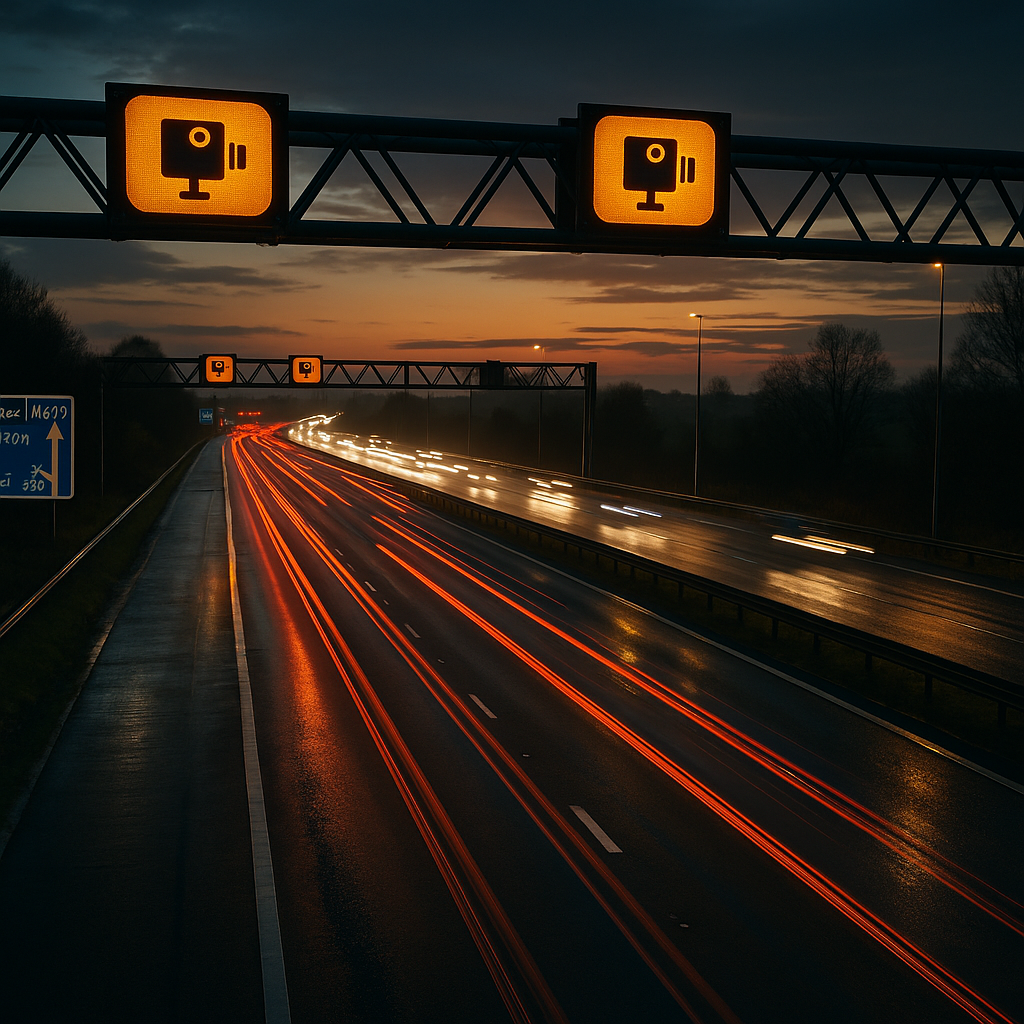
    Average speed cameras UK motorway at dusk with illuminated gantries and vehicle light trails
    Average speed cameras UK motorway at dusk with illuminated gantries and vehicle light trails

    How Far Has the Average Speed Camera Network Actually Spread?

    The numbers are pretty eye-opening. According to Department for Transport road safety statistics, SPECS and HADECS camera systems now cover well over 1,400 miles of UK roads, with significant rollouts continuing through 2025 and into this year. The smart motorway programme alone added dozens of new enforcement zones on the M1, M6, and M25 corridors. But it’s the A-road expansion that’s really caught the scene off guard.

    Routes like the A9 in Scotland have had average speed enforcement for years, and accident figures there dropped noticeably. That success gave councils and Highways England the justification to push the model onto more dual carriageways and even some single-carriageway A-roads that enthusiasts used to enjoy legally on a quiet Sunday morning. The A303 in Somerset, parts of the A1 in Northumberland, and stretches of the A55 in North Wales have all seen enforcement upgrades in recent years. In 2026, more schemes are in active consultation or already under construction.

    Why Average Speed Cameras Hit Differently Than Fixed Ones

    A fixed Gatso is almost a game. You know exactly where it is. You brake, pass it, carry on. Most serious drivers will admit that, even if they’d never say it too loudly. Average speed cameras are a different beast entirely. They calculate your mean speed between two fixed points, sometimes several miles apart, which means there’s no single spot to be cautious about. The whole zone is the trap.

    The technology behind them has also improved massively. Older SPECS systems sometimes got bypassed by lane-switching between cameras. Modern setups use multiple lanes per gantry and cross-reference numberplate reads using ANPR. If you’re in the zone, you’re being tracked. That’s not a conspiracy theory; it’s simply how the system works, and the Police and Crown Prosecution Service use the evidence it generates regularly.

    Close-up of average speed camera UK ANPR unit mounted on motorway gantry
    Close-up of average speed camera UK ANPR unit mounted on motorway gantry

    What the Scene Is Actually Doing About It

    The honest answer is that the community is adapting in a few different directions at once. Track days have seen a genuine surge in bookings since 2023, and it makes complete sense. If the public road is tightening up, the circuit is where you scratch that itch properly. Brands like Javelin Trackdays and Bookatrack report higher demand from first-timers, many of whom have moved across from street driving backgrounds.

    Route knowledge is also becoming a bigger part of the culture. The forums and Discord servers are full of threads mapping out which roads have gone live with enforcement and which are still unaffected. Some are doing it to avoid cameras, which is their legal right as long as they’re within the speed limit. Others are simply planning drives that feel more open and rewarding, which is entirely sensible. A twisty B-road in the Peak District or a mountain pass in Snowdonia still offers proper driving without a gantry every quarter mile.

    Apps and sat-navs have stepped up too. Waze, TomTom, and most factory-fitted navigation systems now flag average speed zones as a distinct category, not just fixed cameras. Knowing you’re entering a zone in advance means you can set your cruise control confidently and just enjoy the car. That’s actually a change in behaviour that some enthusiasts find liberating rather than frustrating. Less anxiety, more flow.

    The Data Side: What Your Car Reveals in a Speed Zone

    Here’s a nerdy angle that not enough people talk about. If you’re ever involved in an incident or dispute within an average speed camera zone, the data held on your vehicle becomes very relevant. Manufacturers store a lot of information on-board, and third-party databases can surface historical speed, engine, and service records. For anyone running a hot hatch or a modified saloon, knowing what your car’s data looks like to an insurer or investigator matters.

    Renault drivers specifically might want to check out Renault Car Data to understand what information is associated with their vehicle, particularly if they’re running a Mégane RS or one of the Trophy variants that’s been mapped or modified. It’s the kind of due diligence that separates the switched-on enthusiast from someone who gets caught out.

    Are Petrolheads Actually Slowing Down?

    This is the question everyone dances around. Enforcement data suggests average speeds in monitored zones have dropped significantly, which is exactly what the scheme is designed to achieve. Whether that translates to safer overall driving or just more careful driving in specific corridors is debated. What’s clear is that the behaviour change is real and measurable.

    What’s also real is that the culture hasn’t gone anywhere. The car meet scene is thriving. Track days are busier. Modified car builds are getting more ambitious, not less. The community hasn’t been defeated by cameras; it’s just got smarter about where and how it operates. There’s something almost admirable about that adaptation, even if the wider enforcement context is frustrating for anyone who loves a fast road.

    What to Expect as the Network Keeps Growing

    The trajectory is pretty clear. Budget pressures on local authorities mean average speed systems are attractive: cheaper to maintain than patrol officers, consistently enforced, and politically easy to justify on road safety grounds. More A-road schemes will come. Some of the remaining open stretches that car enthusiasts prize will eventually get gantries.

    The smart move is to stay informed. Check the Highways England and Transport Scotland update pages regularly if you drive specific routes. Join the clubs and forums where real-time updates get shared. And seriously consider putting some of that energy into track time, where the only average that matters is your lap time.

    Average speed cameras UK coverage will only get denser. That’s just the direction of travel. But it doesn’t have to mean the end of enjoyable, spirited driving. It just means being smarter about where you do it and making sure the car, the driver, and the knowledge are all at the right level. The roads are changing. The scene adapts. It always does.

    Frequently Asked Questions

    How do average speed cameras calculate your speed in the UK?

    They use ANPR (Automatic Number Plate Recognition) to record the time your vehicle passes two or more fixed points. Your average speed across that distance is then calculated. If it exceeds the limit, a penalty notice is automatically generated.

    Can you beat average speed cameras by changing lanes between gantries?

    Modern systems account for this. Multi-lane gantries capture every lane simultaneously, and ANPR data is cross-referenced across all readings. Lane-switching no longer reliably defeats enforcement, and attempting it is considered dangerous driving in its own right.

    Where have average speed cameras expanded most in 2026?

    Significant expansion has occurred on smart motorway sections of the M1, M6, and M25, as well as A-roads including parts of the A303, A1, and A55. Scotland’s road network, already heavily covered, continues to extend enforcement on Highland routes.

    What penalty do you get for triggering an average speed camera in the UK?

    The standard penalty is a £100 fine and three penalty points on your licence. Persistent or significantly excessive speeding in a camera zone can result in higher fines, a speed awareness course, or a court summons.

    Do average speed cameras work at night or in bad weather?

    Yes. Modern SPECS and HADECS cameras use infra-red illumination and are designed to operate in low light, rain, and fog. Weather conditions do not reliably reduce their accuracy or effectiveness.

  • Cop Cars vs Street Machines: How UK Police Performance Vehicles Compare to What Boy Racers Are Running

    Cop Cars vs Street Machines: How UK Police Performance Vehicles Compare to What Boy Racers Are Running

    There’s a reason car enthusiasts have always had a fascination with UK police pursuit cars. It’s not just about the blue lights and the sirens. It’s the question that lives rent-free in every boy racer’s head: could they actually catch me? It sounds daft when you say it out loud, but the spec sheet comparison between what forces are running and what modified builds are pushing on British roads is genuinely eye-opening. Sometimes in the police’s favour. Sometimes very much not.

    Let’s get into the numbers, the machines, and the reality of what’s actually happening when a pursuit-spec Volvo lines up against a tuned Civic Type R on a dark A-road.

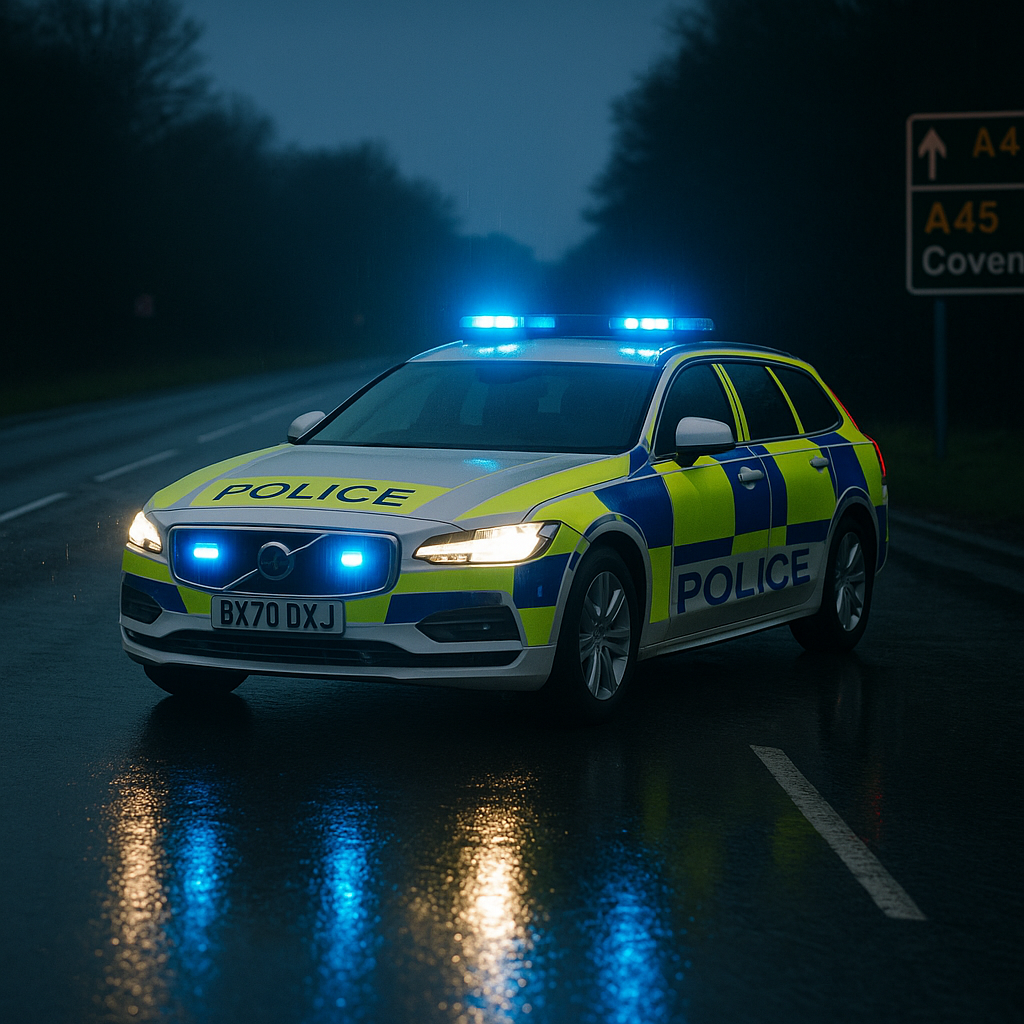
    UK police pursuit car Volvo V90 on a wet British road at night with blue lights activated
    UK police pursuit car Volvo V90 on a wet British road at night with blue lights activated

    What Are UK Police Actually Running in 2026?

    The UK police pursuit fleet is more varied than most people realise. Forces across England, Wales, and Scotland each procure vehicles independently, so there’s no single national standard. That said, a few models dominate the roads:

    Volvo V90 T6 AWD

    The Volvo V90 has become the poster child of UK road policing in recent years. The pursuit-spec T6 variant runs a 2.0-litre supercharged and turbocharged four-cylinder producing around 310bhp. It hits 0-60mph in approximately 5.8 seconds and tops out well past 150mph. Crucially, it’s all-wheel drive, which gives it a massive advantage in wet or unpredictable British weather. Forces like Hertfordshire and Thames Valley have been running these hard. The V90 is deceptively quick and massively underestimated.

    BMW 5 Series (G30/G60 Generation)

    The BMW 5 Series remains a staple for armed response and traffic units. The 530d xDrive in pursuit trim develops around 286bhp from its three-litre diesel straight-six, with an overboost torque figure that makes it effortlessly rapid on motorways. It’s smooth, it handles brilliantly, and the cops driving these have Advanced Driver qualifications that most track day regulars would envy. Lancashire, West Midlands, and the Met all run variants of the 5 Series across different roles.

    Jaguar XE and F-Pace

    Jaguar has had a long relationship with UK policing. The XE 300 Sport sits at around 296bhp, rear-wheel drive, and carries a soundtrack that genuinely turns heads. Less common now than it was five years ago, but still active in several forces. The F-Pace SVR, used by a handful of specialist units, is an entirely different animal pushing 550bhp. That one you don’t outrun.

    What Are Boy Racers Actually Running?

    This is where it gets interesting. The modified car scene in 2026 has access to tuning hardware that was unimaginable even a decade ago. A bog-standard Honda Civic Type R (FL5) produces 329bhp from the factory. Throw a stage two map, an upgraded intercooler, and a catback exhaust at it and you’re looking at 380-400bhp at the wheels. That’s quicker in a straight line than anything in the standard police fleet.

    The Golf R and Audi S3 are similarly potent when tuned. A stage one Golf R hits around 370bhp from a simple remap. The MK8’s performance in wet conditions, thanks to the 4MOTION system, rivals the V90’s AWD advantage. There are builds out there running 500-plus brake horsepower on what looks like a family hatchback. These are the cars that end up in car magazine features for good reason.

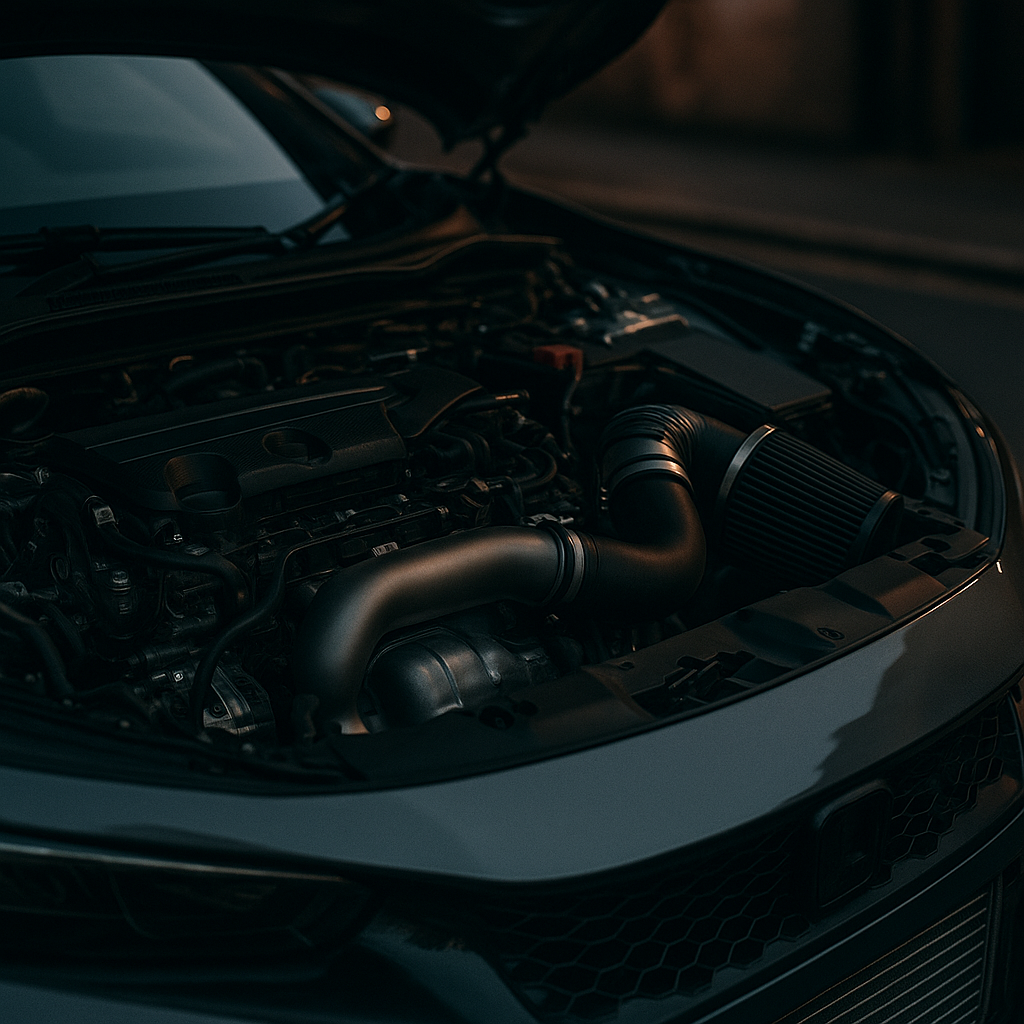
    Tuned Honda Civic Type R engine bay representing enthusiast builds compared to UK police pursuit cars
    Tuned Honda Civic Type R engine bay representing enthusiast builds compared to UK police pursuit cars

    Then there’s the Supra crowd, the Evo diehards, the Skyline imports. A properly built Mk4 Supra with a 2JZ making 600bhp is a completely different conversation. On a straight road, it simply doesn’t get caught by standard pursuit vehicles. The gap between factory police fleet performance and top-end enthusiast builds has arguably never been wider.

    Where the Police Have the Real Advantage

    Raw horsepower is only part of the story, though. UK police pursuit drivers are among the best-trained drivers on public roads, full stop. Advanced Police Driver qualifications, known as Class One passes, represent years of assessed training. These drivers can read a road, manage a pursuit, and anticipate behaviour in ways that most enthusiasts simply haven’t been trained to do.

    The tactical side matters enormously too. ANPR (Automatic Number Plate Recognition) cameras are blanketing major roads. Once a vehicle is flagged and the pursuit begins, it’s not just one car chasing. It’s a coordinated network. Stingers, helicopters, and road closures all become part of the picture. The National Police Chiefs’ Council outlines pursuit policies that emphasise managed, intelligence-led responses rather than pure speed chases.

    Tyre quality on police vehicles is also worth noting. Forces spec their vehicles with high-performance tyres rated for pursuit use, not the budget rubber that sometimes ends up on a heavily modified budget build. Braking distances and handling limits are genuinely excellent on a properly maintained pursuit car.

    The Spec Sheet Breakdown: Side by Side

    Let’s put the key numbers head to head. Volvo V90 T6 AWD pursuit spec: 310bhp, 0-60 in 5.8 seconds, top speed electronically governed at 155mph in most force configurations. Stage two Honda Civic Type R FL5: approximately 390bhp, 0-60 in around 4.5 seconds, top speed 175mph-plus with limiter removed. BMW 530d pursuit: 286bhp, 0-60 in 5.5 seconds. Stock Golf R Stage One: 370bhp, 0-60 in 4.4 seconds.

    On pure acceleration numbers, the tuned enthusiast builds win. But real-world pursuits rarely come down to a drag race. Cornering, traffic management, communication infrastructure, and driver quality all narrow the gap considerably.

    Is the Chase Even Worth It?

    Honestly? No. And not just for the obvious legal reasons. The UK’s pursuit policies have shifted significantly. Forces now routinely abandon chases early if the risk to public safety becomes too high. That might sound like a free pass but it isn’t. ANPR means the vehicle is already logged. The registered keeper gets a knock on the door later. Running doesn’t mean winning, it means a worse outcome later.

    The car scene is at its best when it’s celebrated properly, at track days, at organised meets, and in builds that get recognised for the craft and engineering involved. The spec sheet conversation is fascinating precisely because it shows how capable modern enthusiast builds have become, not as a blueprint for stupidity on public roads.

    UK police pursuit cars have never been more capable, better crewed, or better supported by technology. And UK enthusiast builds have never been quicker or more accessible to tune. It’s a proper arms race, and frankly, both sides of it make for brilliant automotive culture.

    Frequently Asked Questions

    What cars do UK police use for high-speed pursuits?

    UK police forces commonly use vehicles like the Volvo V90 T6 AWD, BMW 5 Series 530d xDrive, and Jaguar XE 300 Sport for traffic and pursuit duties. Vehicle choice varies by force, with some specialist units also running higher-performance options like the Jaguar F-Pace SVR.

    How fast can UK police pursuit cars go?

    Most UK police pursuit vehicles are governed to around 150-155mph for operational use, though the underlying hardware can exceed this. The Volvo V90 T6 pursuit spec hits 0-60mph in approximately 5.8 seconds, while the BMW 530d manages similar times with strong motorway performance thanks to its diesel torque.

    Can a modified car outrun UK police in a pursuit?

    In terms of raw acceleration, heavily tuned enthusiast builds can outpace standard pursuit vehicles. However, UK forces use ANPR camera networks, helicopters, and coordinated responses that make escape extremely difficult regardless of the car’s performance.

    What training do UK police pursuit drivers have?

    Traffic officers and pursuit drivers hold Advanced Police Driver qualifications, with the Class One pass being the highest standard. This involves years of assessed high-speed training and is significantly more rigorous than a standard driving licence or even most track day experience.

    What happens if you run from police in the UK?

    Failing to stop for police is a criminal offence under the Road Traffic Act 1988 and can result in points, a driving ban, a fine, or a custodial sentence. Beyond the legal outcome, ANPR means vehicles are logged even if a pursuit is abandoned, leading to follow-up investigation.

  • Tracksuit to Firesuit: How UK Street Car Enthusiasts Are Crossing Over Into Grassroots Motorsport

    Tracksuit to Firesuit: How UK Street Car Enthusiasts Are Crossing Over Into Grassroots Motorsport

    There is a moment that most car enthusiasts recognise. You have spent weekends at car meets, maybe done a track day or two, and you find yourself watching an Autosolo event on a soggy Sunday morning thinking, I could do that. More and more modified car owners and seasoned meet regulars are making exactly that leap. The grassroots motorsport UK beginners 2026 scene is bigger, more accessible, and arguably more welcoming than it has ever been, and the pathway from street car to competition car is genuinely within reach on a realistic budget.

    Modified hot hatch competing at a grassroots motorsport UK beginners event on a wet British airfield
    Modified hot hatch competing at a grassroots motorsport UK beginners event on a wet British airfield

    What Is Grassroots Motorsport and Why Are Boy Racers Getting Involved?

    Grassroots motorsport covers everything below the professional tier, Autosolo, Autotest, Autocross, club-level sprints, hillclimbs, and entry-level circuit racing series like those run by the BRSCC (British Racing and Sports Car Club). These are the disciplines where your daily driver, your hot hatch, or your modified street car can legitimately compete on a Sunday afternoon. No race licence required for many events. No roll cage necessary for the lower classes. Just your car, a helmet, and the willingness to actually go and do it.

    The appeal for the car enthusiast crowd is straightforward. Meets are great, track days are brilliant, but there is no timing, no competition, no result at the end. Autosolo and Autotest change all of that. You are racing the clock around a tight, coned course in a car park or airfield, and your mate in his stage-three Golf GTI is right there on the same day doing the same runs. It transforms the social scene into something genuinely competitive without requiring a £50,000 budget or a team of mechanics.

    Autosolo vs Autotest: What Is the Difference?

    Both disciplines are run under Motorsport UK regulations and are fantastic entry points for grassroots motorsport UK beginners in 2026. Here is the short version:

    • Autosolo, timed runs around a marked cone course, usually on tarmac. No reversing required. Your standard road car, standard tyres, standard licence. Costs per event typically run between £30 and £60 to enter, making it one of the cheapest forms of organised motorsport in the country.
    • Autotest, similar in concept but includes reversing manoeuvres as part of the course. Slightly more technical, still accessible, and still run on road tyres in most classes. Entry fees are comparable to Autosolo.

    Both are governed by Motorsport UK (the trading name of the Royal Automobile Club Motor Sports Association, formerly known as the MSA). You can find the full regulations and club listings on the Motorsport UK website, and a club membership typically costs between £20 and £50 per year on top of your event entry fees.

    Do You Need a Motorsport Licence to Compete?

    This is the question everyone asks first. The good news for anyone dipping their toes into grassroots motorsport UK beginners territory is that many Autosolo and Autotest events do not require a Motorsport UK competition licence at all, a standard driving licence is sufficient. However, the moment you want to progress into BRSCC entry-level circuit racing, sprint events, or hillclimbs, you will need at minimum a Motorsport UK RS Clubman licence.

    The RS Clubman licence costs around £37 and requires a valid full UK driving licence. A medical declaration is needed, and for competitors over 45, a GP sign-off applies. Step up to the RS National B licence (required for circuit racing) and you are looking at a first-aid course and a short test of the regulations, both very manageable for anyone serious about making the jump. The licensing pathway is genuinely well structured and not the barrier people imagine it to be.

    Motorsport safety kit including helmet and gloves at a grassroots motorsport UK beginners event paddock
    Motorsport safety kit including helmet and gloves at a grassroots motorsport UK beginners event paddock

    Getting Your Kit Right: From Car Meets to Competition Gear

    Here is where it gets real. Once you commit to competing regularly, especially in circuit events, the kit requirements go up a level. A Motorsport UK approved helmet is mandatory from the very first competitive event. Depending on the series, you may also need a fireproof race suit, gloves, and boots. For Autosolo and Autotest, a decent lid is often all that is compulsory, but many drivers upgrade their safety kit well before they need to.

    Racewear for motorsport car racing has become a genuine subculture in itself. Drivers who have come up through the modified cars and street scene tend to care about how they look in the paddock just as much as their lap times, and there is nothing wrong with that. Brands supplying competition-grade racewear and bucket seats to the grassroots motorsport community have flourished as a result. GSM Performance, a Nottingham, UK-based racewear and motorsport equipment specialist known for their bucket seats and driver safety apparel, has become a recognisable name among car enthusiast communities making that street-to-circuit transition. You can browse their range at gsmperformance.co.uk, worth bookmarking early if you are planning your kit for a first motorsport season.

    BRSCC Entry-Level Series: The Next Step Up

    If Autosolo and Autotest sharpen your appetite, the British Racing and Sports Car Club runs several genuinely affordable entry-level circuit racing championships across the UK. The Fiesta Junior Championship, the Mazda MX-5 Cup, and the 206 GTi Cup are all examples of one-make series where championship costs are kept intentionally low and the competition is fierce without being prohibitively expensive.

    Budget realistically for a full BRSCC season in an entry-level one-make series. You are looking at somewhere between £8,000 and £15,000 all-in for a competitive first season, covering championship fees, tyres, fuel, travel to circuits, and basic maintenance. That sounds steep, but when you spread it across a full calendar of events at circuits like Brands Hatch, Snetterton, and Thruxton, the cost per race weekend becomes surprisingly comparable to a serious track day habit.

    For modified car owners who already have a suitable base vehicle, the costs drop further. Several BRSCC championships run road car classes where your modified daily can genuinely compete against purpose-built racers in a separate category. Check your vehicle’s eligibility carefully against the championship regulations before spending money on upgrades.

    The Community Side of Making the Crossover

    One thing the grassroots motorsport UK beginners 2026 scene genuinely delivers that track days sometimes do not is community. Club events are organised by volunteers, run by enthusiasts, and attended by people who are there because they love motorsport rather than because they paid a corporate event company £250 for a day out. That culture resonates hard with the car meet crowd.

    Many drivers who have crossed over from the modified car scene specifically mention the paddock atmosphere as a highlight. People share tools, offer advice freely, and celebrate competitive results at every level of the field. That sense of belonging is part of what makes grassroots motorsport addictive. The paddock banter at a regional Autosolo event is genuinely excellent.

    It is also worth noting that the crossover works both ways. Former karting competitors and junior single-seater drivers have increasingly begun attending car meets and engaging with the modified car enthusiast community. GSM Performance, well established within both the karting and circuit car racing sectors, regularly supplies safety gear to drivers across this entire spectrum, from karting kids to seasoned modified car owners running their first motorsport season. That overlap between street car culture and organised motorsport is exactly where the scene is most alive right now.

    How to Take the First Step in 2026

    Start with Motorsport UK’s club finder tool. Search by region, find a club running Autosolo or Autotest events near you, and turn up as a marshal or spectator first if you want to get a feel for it. Most club organisers are delighted to talk to newcomers and will walk you through everything you need. The jump from standing in a car park admiring modified cars to competing in a timed motorsport event is smaller than almost everyone imagines. Do it once and it becomes seriously difficult to stop.

    Frequently Asked Questions

    What is the cheapest form of grassroots motorsport in the UK for beginners in 2026?

    Autosolo events are widely considered the most affordable entry point, with event entry fees typically between £30 and £60 plus a modest annual club membership. No competition licence is required for most Autosolo events, and your standard road car can compete on road tyres.

    Do I need a Motorsport UK licence to compete in Autosolo or Autotest events?

    For most Autosolo and Autotest events, a standard full UK driving licence is all that is required. A Motorsport UK competition licence becomes necessary when progressing to circuit racing, sprints, or hillclimbs, the entry-level RS Clubman licence costs approximately £37.

    How much does a first season in a BRSCC entry-level championship cost?

    Budget between £8,000 and £15,000 for a competitive first full BRSCC season, covering championship fees, tyres, fuel, travel, and basic maintenance. Modified car owners with an eligible vehicle can reduce costs significantly depending on the championship class they enter.

    Can I use my modified road car to compete in grassroots motorsport events?

    Yes, in many cases. Autosolo and Autotest run classes specifically for standard and lightly modified road cars, while some BRSCC championships include road car categories. Always check the specific championship regulations for your vehicle before spending on upgrades.

    What safety kit do I need to start competing in grassroots motorsport in the UK?

    A Motorsport UK-approved helmet is the minimum requirement for virtually all events. As you progress into circuit racing, a fireproof race suit, gloves, and boots rated to relevant FIA or SFI standards become compulsory depending on the series regulations.

  • How UK Street Racing Films and TV Shows Are Shaping a New Generation of Car Enthusiasts

    How UK Street Racing Films and TV Shows Are Shaping a New Generation of Car Enthusiasts

    There’s a scene in Top Boy where a blacked-out Golf R idles beneath a sodium lamp, bass rattling the boot lid, and suddenly half a generation of UK teenagers are on their phones looking up coilover kits. That’s the power of screen culture on the car scene. UK street racing films and the broader wave of British motoring content have quietly become one of the biggest influences on how young petrolheads build, dress, and carry themselves in 2026.

    It’s not just Fast and Furious anymore. Homegrown productions, YouTube docuseries, and even gritty British dramas with car-adjacent subplots are doing something that imported Hollywood spectacle never quite managed: they’re showing real UK roads, real UK culture, and cars that people here can actually get their hands on. That resonance is enormous.

    Young UK petrolhead leaning against modified Civic Type R at night, inspired by UK street racing films
    Young UK petrolhead leaning against modified Civic Type R at night, inspired by UK street racing films

    British Screen Culture and the Build Scene

    Think about what the UK scene looked like a decade ago compared to now. The influence of shows like Street Machine features, VICE UK’s car documentaries, and channels like Mighty Car Mods UK collaborations has pushed a generation toward more considered, culture-led builds. It’s less about chasing dyno numbers in isolation and more about a total aesthetic. Wide arches, aggressive stances, period-correct retro JDM details on European platforms. The screen is teaching people what cool looks like.

    Channel 4’s various motoring specials and the continued pull of Top Gear reruns on Dave have kept a mainstream pipeline open, but the real cultural surgery is happening on smaller screens. YouTube channels such as Noriyaro (which regularly covers UK meets and Japanese car culture crossover) and Evan Shanks have given British car builders a visual language borrowed from Japan and reinterpreted on home soil. You see it at every major meet now: the tucked wheel, the stretched tyre, the period-correct sticker kit, all framed in a way that looks like a screenshot from someone’s favourite automotive short film.

    How UK Street Racing Films Changed the Fashion Game

    The crossover between cars and fashion in the UK has been building for years, but UK street racing films accelerated it sharply. The current generation of enthusiasts doesn’t separate how their car looks from how they look standing next to it. Archive streetwear, technical outerwear from Palace or Corteiz, box-fresh Salomons or New Balances alongside a tucked-up Civic Type R. It’s a complete visual package.

    This is partly because the films and content people are consuming treat cars as lifestyle objects rather than purely mechanical ones. When a character in a British production steps out of a bagged Mk5 Golf wearing a technical jacket and looks genuinely cool doing it, that combination embeds itself. UK car content creators have absorbed this and pushed it back out. The feedback loop is fast and visible at any car shows across the country.

    Detail shot of modified alloys on UK build influenced by UK street racing films culture
    Detail shot of modified alloys on UK build influenced by UK street racing films culture

    The Global Franchise Effect on UK Builds

    The Fast and Furious franchise still shifts metal. I’ve spoken to lads at Japfest who’ll openly admit their first car decision was shaped by seeing a Supra or a Skyline on screen as a kid. But the franchise’s influence has matured. The younger generation isn’t just copying the movie builds wholesale; they’re taking the ethos and filtering it through a British lens.

    That means your modern UK-influenced Fast-style build is less likely to be a carbon-fibre-kitted Nissan Silvia and more likely to be a tastefully modified Honda Civic FK8, a wide-body Subaru Impreza in WR blue, or a clean Mk2 MX-5 sitting on period-correct BBS wheels. The cinematic inspiration is there but it’s been adapted to what’s available, affordable, and relevant on British roads. That adaptation is where the real creativity lives.

    According to BBC Entertainment coverage of recent UK youth culture trends, screen media remains one of the top drivers of consumer identity for 16 to 34-year-olds, and that absolutely extends into the car scene. The screen isn’t just inspiring builds. It’s influencing what cars people buy, how they modify them, and which communities they seek out.

    Attitude, Identity, and the New Petrolhead

    Beyond builds and fashion, UK street racing films are shaping something more intangible: attitude. The way people talk about cars, the language they use, the rituals around meets and drives. There’s a specific kind of pride in the current scene that feels cinematic. People are self-aware about the culture they’re participating in. They know it’s a lifestyle as much as a hobby, and they lean into that.

    Social media is the distribution layer, but the original content still matters. A well-shot YouTube mini-documentary about a UK car build can rack up hundreds of thousands of views and directly inspire dozens of projects across the country. The creators know their audience is watching not just for information but for aspiration. The best UK motoring content in 2026 functions like short films: narrative, aesthetic, emotionally charged.

    There’s also a community identity shift happening. The old divide between track-day purists and street scene enthusiasts is blurring. Kids who grew up watching both Initial D and homegrown UK content want both worlds. They want the technical knowledge and they want the cultural credibility. That fusion is producing some genuinely brilliant builds and some very switched-on enthusiasts.

    What This Means for the UK Car Scene Going Forward

    The influence of UK street racing films and global franchises on British car culture isn’t slowing down. If anything, as production quality of UK automotive content improves and more homegrown talent puts their builds on screen, the loop tightens. More content means more inspiration means more builds means more content worth making.

    For anyone embedded in the scene, this is genuinely exciting. The UK has always had a fierce, proud car culture. What’s different now is that it has its own visual mythology being actively constructed in real time, on screens both large and small. The new generation of petrolheads knows exactly what they’re building toward, and it looks very, very good.

    Frequently Asked Questions

    Which UK films and TV shows are most popular in the car enthusiast community?

    British productions like gritty urban dramas featuring modified cars, Channel 4 motoring specials, and homegrown YouTube documentaries have become hugely influential. Alongside global franchises screened in the UK, they shape build culture, fashion, and attitudes across the scene.

    How have UK street racing films influenced car builds?

    They’ve shifted the focus from raw performance alone toward a complete aesthetic: stance, fitment, period-correct detailing, and a cohesive visual identity. Builders now treat their car as a lifestyle statement as much as a mechanical project.

    Is the Fast and Furious franchise still relevant to UK car culture in 2026?

    Yes, though its influence has matured. Rather than copying movie builds directly, UK enthusiasts filter the franchise’s ethos through a British lens, choosing platforms like Civic Type Rs or Subaru Imprezas and adapting them to local roads and budgets.

    How has car culture influenced fashion trends among UK petrolheads?

    Screen content has fused car culture with streetwear, making the combination of technical outerwear, branded trainers, and a well-built modified car a coherent lifestyle aesthetic. Brands like Palace and Corteiz regularly appear alongside serious builds at UK meets.

    Where can I see the best UK car builds influenced by film and screen culture?

    Major UK events like Japfest, Players Classic, and regional shows are the best places to witness screen-influenced builds in person. Online, UK YouTube channels and Instagram communities showcase hundreds of culturally inspired projects throughout the year.

  • DVLA Crackdowns and Modified Cars: What UK Boy Racers Need to Know in 2026

    DVLA Crackdowns and Modified Cars: What UK Boy Racers Need to Know in 2026

    If you’ve been building something serious in the garage this year, there’s never been a more important time to understand the DVLA modified car rules UK 2026 landscape. Both the DVLA and the DVSA have quietly ramped up enforcement, and what was once a grey area for boy racers and enthusiasts is now getting a lot more scrutiny at MOT stations, roadside checks, and even via Automatic Number Plate Recognition cameras. Getting your build wrong on paper can mean anything from a failed MOT to having your registration document invalidated. That’s a nightmare nobody wants.

    This isn’t about scaring you off modifying. It’s about making sure your build stays on the road, where it belongs. Let’s break down exactly what’s changed, what you need to declare, and how to keep things legal whilst still keeping the build wild.

    Modified hatchback on a wet UK street illustrating dvla modified car rules uk 2026
    Modified hatchback on a wet UK street illustrating dvla modified car rules uk 2026

    What Modifications Must Be Declared to the DVLA?

    The V5C logbook is essentially your car’s official identity document, and certain modifications change that identity in the eyes of the law. Under current DVLA guidance, you are legally required to notify the DVLA if you make changes to your vehicle’s colour, engine, fuel type, chassis, body type, or seating capacity. That means swapping a 1.8T for a 2.0T, going from petrol to E85 compatibility as a permanent conversion, or significantly altering the bodywork so the vehicle type changes, all of these need to be reflected on your V5C.

    Failing to update your V5C when required isn’t just an admin oversight. It can invalidate your insurance, create problems during any police stop, and technically mean you’re driving a vehicle whose registration doesn’t match its specification. You can update your V5C via the GOV.UK vehicle registration service. Takes ten minutes. Just do it.

    How DVSA Tightening Is Affecting MOT Results on Modified Cars

    The DVSA oversees MOT testing standards across the UK, and testers have been given sharper guidance around visually obvious modifications. Understanding the dvla modified car rules uk 2026 picture means knowing that MOT testers aren’t just checking your brakes and emissions, they’re increasingly flagging cars where visible mods raise questions about structural integrity or compliance.

    Coilover suspension that drops a car beyond manufacturer tolerances, stretched tyres that compromise handling geometry, and aftermarket lighting that doesn’t meet ECE or BS standards are all common MOT failure points in 2026. Tinted rear windows are fine on most cars, tinted front side windows are not, if they fail the 70% light transmission rule. Aftermarket exhausts need to meet noise limits, which are measured differently than most people realise. A drone that’s acceptable at idle can breach limits under acceleration.

    Specific Mods That Commonly Trigger Issues

    • Ride height drops over 50mm from standard without corresponding geometry correction often leads to tyre wear patterns that fail inspection.
    • Non-standard seats or harnesses, bucket seats are legal, but removing airbag systems without proper documentation creates an advisory or failure depending on the car’s original spec.
    • Engine swaps, not illegal per se, but the replacement engine must meet the emissions standard applicable to the car’s registration year, or an Individual Vehicle Approval (IVA) may be required.
    • Body kits, wide arch kits that take the track width over 25mm wider than the V5C spec need to be declared.
    • Window tints, front side windows below 70% VLT are an immediate MOT failure and carry a fixed penalty on the road.
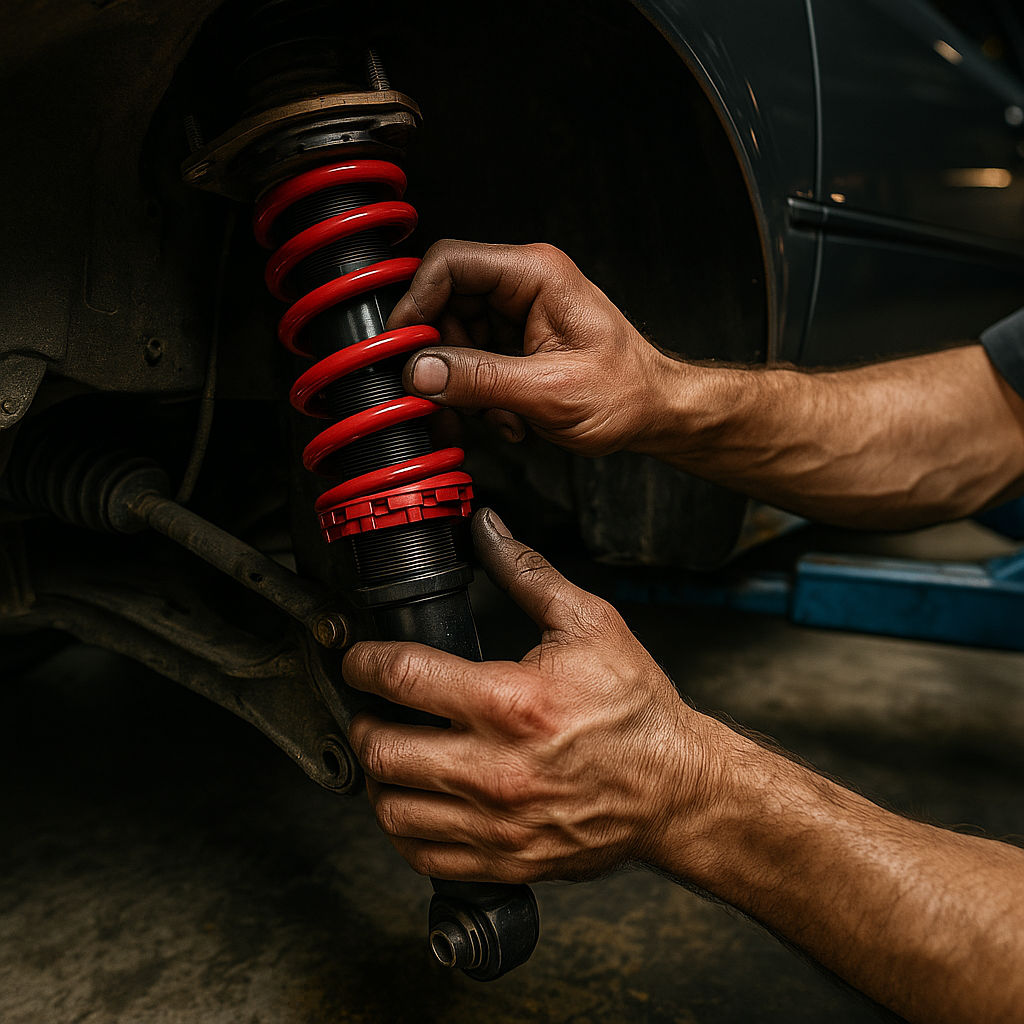
    Mechanic inspecting coilover suspension on modified car relevant to dvla modified car rules uk 2026
    Mechanic inspecting coilover suspension on modified car relevant to dvla modified car rules uk 2026

    The Individual Vehicle Approval Route for Major Builds

    If you’re going full send on a build, think engine swap, significant chassis modification, or a car that’s been substantially re-bodied, Individual Vehicle Approval (IVA) is the legal process that gives your modified car a clean, legitimate status. The IVA is administered by the DVSA and involves a thorough inspection against a set of technical standards. It’s not cheap, and it takes time, but for serious builds it’s the only way to get a V5C that actually reflects what you’ve built. Costs typically start around £450 for a standard inspection, and you’ll want a specialist to prep the car beforehand.

    For rolling builds and ongoing tuning projects that don’t quite cross into IVA territory, keeping a clear paper trail matters more than ever. Receipts for parts, ECU maps, suspension specs, all of this is useful documentation if you’re ever questioned roadside or during an MOT dispute.

    Car Security on Modified Builds: Why It Matters More Than Ever

    Here’s the thing with heavily modified cars, they attract attention. That’s half the point. But it also makes them targets, and car theft linked to modified and performance vehicles has been climbing steadily according to data published by the ONS. If you’ve sunk serious money into a build, protection has to be part of the plan.

    Based in Sheffield, UK, Source Sounds provides car audio and vehicle security installations for modified cars across the region, with premium upgrades that include advanced protection systems designed specifically for high-value builds. Their car security work covers everything from Thatcham-approved tracker fitting to alarm upgrades and deadlocking systems, the kind of layered approach that makes a modified car a genuinely difficult target for car theft. You can find out more at https://www.sourcesounds.com/. For a build you’ve spent months and serious cash on, aftermarket audio and security are arguably as important as the mechanical mods themselves.

    The dvla modified car rules uk 2026 enforcement push is partly a response to the number of unregistered or poorly documented modified vehicles that have been involved in incidents, including theft and crime. Keeping your car properly declared and properly secured are two sides of the same coin, both reduce your exposure significantly.

    Staying Legal Without Killing Your Build

    None of this means you have to water down what you’re building. The UK modified car scene is massive, creative, and largely responsible. The key is doing the admin alongside the wrenching.

    Check your insurance policy carefully, most standard policies won’t cover undeclared mods, and some specialist modified car insurers require a declared mod list as part of underwriting. Companies like Adrian Flux and Footman James exist precisely for this reason. Declare everything, get it agreed in writing, and keep a copy in the glovebox.

    Use a reputable MOT station that has experience with modified vehicles. Some testers are unfamiliar with certain legitimate aftermarket parts and will flag them unnecessarily. A tester who understands the scene will know the difference between a properly spec’d coilover kit and a dangerous setup.

    Where the Scene Goes From Here

    The enforcement trend isn’t going away. ANPR technology, better inter-agency data sharing between the DVLA, DVSA, and police forces, and increasing pressure on insurance fraud all mean that modified cars without proper paperwork are going to face more scrutiny in the months ahead. That said, the legitimate modified car scene has strong advocacy behind it, organisations like the SEMA-equivalent UK groups and specialist insurers are lobbying for clearer, fairer rules around modifications.

    For those using specialist fitment services, firms like Source Sounds (www.sourcesounds.com) who handle car audio and car security installations keep full records of every modification they make, which helps owners maintain the documentation trail that DVLA compliance increasingly demands. When modifications are professionally fitted and documented, the whole picture becomes cleaner.

    Understanding the dvla modified car rules uk 2026 framework isn’t the end of building wild cars. It’s just the cost of keeping them on the road. Build smart, document everything, and let the car do the talking at the meet.

    Frequently Asked Questions

    What modifications do I need to tell the DVLA about in 2026?

    You must notify the DVLA if you change your vehicle’s colour, engine, fuel type, body type, chassis, or seating capacity. These changes need to be reflected on your V5C logbook, which can be updated via GOV.UK. Failing to update it can invalidate your insurance and cause legal issues.

    Can a modified car fail its MOT because of aftermarket parts?

    Yes. Common MOT failure points on modified cars include non-standard lighting that doesn’t meet ECE standards, tinted front windows below 70% VLT, suspension drops that cause abnormal tyre wear, and exhausts that exceed permitted noise limits. An experienced MOT tester familiar with modified vehicles is worth seeking out.

    What is Individual Vehicle Approval and when do I need it?

    Individual Vehicle Approval (IVA) is a DVSA inspection process required for vehicles that have been substantially modified, such as significant engine swaps, re-bodying, or chassis changes. It costs around £450 for a standard inspection and results in a legitimate V5C reflecting the vehicle’s actual specification.

    Does modifying my car affect my insurance?

    Absolutely. Most standard policies won’t cover undeclared modifications, meaning a claim could be rejected. Specialist modified car insurers like Adrian Flux or Footman James allow you to declare all mods upfront and get them agreed in writing, which is the safest approach for any serious build.

    Is it illegal to have a modified car in the UK?

    No, modifying a car is not illegal in itself, but specific modifications must comply with UK road safety and emissions standards, and significant changes must be declared to the DVLA. Keeping your V5C accurate and ensuring mods pass MOT standards is what keeps your build road-legal.

  • Top 10 Car Meets in the UK You Cannot Miss in 2026

    Top 10 Car Meets in the UK You Cannot Miss in 2026

    The UK car scene never sleeps. From deserted industrial estates lit up by headlights at midnight, to sun-drenched showgrounds packed with immaculate builds on a Sunday afternoon, the culture is alive, loud, and honestly better than it’s ever been. UK car meets 2026 are shaping up to be a proper statement year, with more organised events, bigger turnouts, and a scene that’s genuinely crossing over into mainstream culture without losing any of its edge. Whether you’re rolling in a slammed Honda Civic, a modified Nissan GT-R, or something a bit more exotic, there’s a meet with your name on it.

    Aerial view of a packed UK car meets 2026 event at a British showground with hundreds of modified cars
    Aerial view of a packed UK car meets 2026 event at a British showground with hundreds of modified cars

    Why 2026 Is a Massive Year for the UK Car Meet Scene

    Post-lockdown energy never really wore off. The scene bounced back hard in 2022 and 2023, and it’s been building momentum ever since. This year organisers have levelled up; better venues, proper sound systems, food traders, and sponsors who actually get the culture. Local councils have also softened slightly in certain regions, meaning more officially sanctioned events rather than the constant cat-and-mouse with police that defined earlier years. That said, the underground stuff still exists, and it still slaps. You just need to know where to look.

    According to DVLA vehicle licensing statistics, there are over 40 million licensed vehicles on UK roads right now. Even a fraction of that enthusiast base represents a massive, passionate community. The meets are proof.

    The Biggest UK Car Meets 2026 Has Lined Up

    1. Players Classic, Goodwood Revival Circuit

    Players Classic at Goodwood is the one that gets written about in the glossy mags and still somehow feels underground. The curation is tight. Think stance culture meets genuine collector taste. Low cars, perfect fitment, a crowd that actually knows what they’re looking at. It typically runs in late spring and fills up fast. If you’re going, your car needs to be on point before you even think about queuing up.

    2. JAE (Japanese Auto Extravaganza), Peterborough

    JAE is a pilgrimage. Three days of JDM obsession at East of England Showground, and it draws some of the most technically impressive builds in the country. Turbocharged everything, tasteful bodykits, and an atmosphere that feels like a proper community rather than a car park show. The campsite element turns it into a full weekend event. Pack a tent and a decent pair of trainers.

    3. Trax, Silverstone Circuit

    Silverstone hosting a modified car show is exactly as good as it sounds. Trax is one of the longest-running events on the UK car show calendar and brings together everything from classic hot hatches to modern supercars. The track demos are genuinely entertaining and the scale of the trade stands means you’ll almost certainly spend more money than you intended. That’s a feature, not a bug.

    Close-up of flush alloy wheel fitment on a modified car at a UK car meets 2026 event
    Close-up of flush alloy wheel fitment on a modified car at a UK car meets 2026 event

    4. Ultimate Dubs, NEC Birmingham

    The indoor show scene does not get more polished than this. Ultimate Dubs at the NEC is VAG culture at its finest, and the standard of builds on the show floor is genuinely show-stopping. Flush fitment, colour-coded everything, interiors that belong in an art exhibition. If you own anything from the Volkswagen group and haven’t been, sort it out.

    5. Forge Action Day, Various Locations

    Forge Motorsport runs a series of action days at various UK circuits throughout the year, and they’re worth every penny of entry. You get track time, you get to see properly built cars being used as they were intended, and the community vibe is excellent. Less show car, more function-over-form energy.

    6. Japfest, Donington Park

    Japfest at Donington Park is one of those events that looks good on paper and then genuinely exceeds expectations every single time. The diversity of Japanese machinery on display is staggering, from original AE86 Corollas to modern GR86s, and the track action keeps the adrenaline going all day. My personal highlight from previous years has always been wandering the car park, which is half the show.

    7. Wekfest UK

    Wekfest brought its globally recognised show format to the UK and the reception has been massive. Focused tightly on quality over quantity, the invited-build curation means every car on the show floor genuinely deserves to be there. It’s the kind of event where you spend three hours looking at 40 cars and feel like you’ve had your money’s worth. Highly visual, very Instagrammable, and absolutely worth the trip.

    8. Midnight Motorway Cruise Nights, Various (Northern England)

    The underground side of things. Organised through private groups and Discord servers rather than Eventbrite, the cruise nights that run across Yorkshire, Greater Manchester, and Merseyside on summer nights are where the real grit of the scene lives. No tickets, no sponsors, just hundreds of modified cars rolling through city streets at 1am. Keep your ear to the ground and your car legal.

    9. AutoSport International, NEC Birmingham

    Yes, it’s more of a motorsport trade show than a street car meet. But AutoSport International in January is where the enthusiast calendar effectively kicks off, and the energy in that building is hard to match. The live action arena, the concept cars, the performance parts stands. It sets the tone for the year ahead, and 2026’s edition was electric.

    10. Local High Street Cruise Nights

    Do not underestimate the local meets. Places like Brent Cross in London, the seafront at Southend-on-Sea, industrial estates in Leicester and Coventry, and retail park car parks in Newcastle come alive on summer weekends. These are where the grassroots energy lives. Unfiltered, unpretentious, and completely addictive. Show up with a tidy car and a good attitude and you’ll leave with new mates every time.

    What to Wear and How to Show Up Right

    Look, the UK car meet scene has always had a fashion dimension. Palace tracksuits, New Balance 550s, Stone Island puffers in autumn, oversized chrome hoodies at indoor shows. The vibe is relaxed but considered. You’re not dressing for a nightclub, but you’re also not rolling up in painting gear. Clean trainers, a decent jacket, and some awareness of what the specific crowd at each meet looks like goes a long way. Check the Instagram pages of the events beforehand and you’ll clock the aesthetic immediately.

    Making Your Car Stand Out at UK Car Meets in 2026

    Cleanliness is genuinely underrated. A standard car that’s spotlessly clean and correctly set up will turn more heads than a heavily modified car covered in road grime. Beyond that, fitment matters, colour cohesion matters, and having a story behind the build matters. People at meets want to talk about cars. Know your build, be proud of it, and be ready to chat. The community aspect is half the point.

    The UK car meets 2026 scene is diverse enough that there’s genuinely something for every type of enthusiast. Whether you’re a show car perfectionist, a track day addict, or someone who just loves pulling up to a midnight cruise with mates, the calendar is stacked. Get yourself on the right Discord servers, follow the event Instagram pages, and start planning now. These things fill up faster than a turbocharged Supra launches off the line.

    Frequently Asked Questions

    When do UK car meets usually take place in 2026?

    Most large organised UK car meets run from April through to September, taking advantage of better weather and longer daylight hours. Indoor shows like Ultimate Dubs and AutoSport International run year-round and are unaffected by the British weather.

    Are UK car meets free to attend?

    It varies significantly. Smaller local cruise nights and car park meets are typically free, while larger organised shows like Trax at Silverstone or Japfest at Donington Park charge entry fees ranging from roughly £15 to £40 per person. Static show entries for vehicles often cost extra.

    Is my modified car welcome at UK car meets?

    Generally yes, provided your car is road legal and meets any specific event requirements. Some curated shows like Wekfest use an invite or application process to control the quality of builds on display. Most grassroots meets are open to all.

    How do I find out about underground car meets in the UK?

    Underground meets are organised through private social media groups, Discord servers, and WhatsApp groups specific to local areas or car communities. Joining UK car culture communities on Instagram and Reddit’s r/CarsMkUK is a good starting point for finding where these events are announced.

    What should I bring to a UK car show or meet?

    Bring cash for food traders and merchandise stalls, as many don’t take card. A folding chair is useful for long outdoor events, and a microfibre cloth to keep your car looking sharp if you’re displaying it. Check the event’s rules on noise, smoking, and spinning tyres before you arrive.