
I’ve watched a mate roll his freshly built Subaru Impreza into an MOT bay with total confidence, only to walk out two hours later clutching a failure sheet longer than a Lidl receipt. Modified car MOT failure in the UK 2026 is a real and increasingly common problem, and the testers are getting sharper every year. DVSA tester guidance has tightened up on aftermarket components, and if you’ve been bolting stuff to your car without thinking about the annual test, this is your wake-up call.

The good news is that most failures are predictable. The checks aren’t random. Once you know what testers are specifically looking for on modified and tuned vehicles, you can get ahead of it and spend your money on the right fixes before you’re scrambling for a retest slot.
Suspension mods: where most enthusiasts get caught out
Coilovers and lowering springs are among the most popular modifications in the UK scene, and they’re also responsible for a significant chunk of MOT failures on modified cars. The tester will check for excessive play in ball joints, worn bushes, and, critically, whether the car’s ride height and geometry have introduced excessive wear or instability. Slam your car to the floor and you’re likely running negative camber that’s chewing through tyres unevenly. Testers notice that.
Shock absorbers are tested by the bounce test and, increasingly, by the roller brake tester’s indirect signals. A damper that’s gone soft after 30,000 miles of street use will often be flagged. The DVSA’s tester manual specifies that a shock absorber showing “excessive fluid leakage” or “continuous oscillation after the bounce test” is an automatic fail. That’s not a technicality, it’s straightforward physics, and clapped-out coilovers from a cheap eBay set will almost always fail it.
Subframe condition matters too. If you’ve been running hard on track days or aggressive driving on B-roads, check your subframe mounting points before you even book the test. Cracks or severe corrosion around mounting points is an immediate fail. I’d pull the car over a pit or get it on a lift a fortnight before the test just to look underneath.
Lighting: aftermarket LEDs and projector headlights are a bigger risk than you think
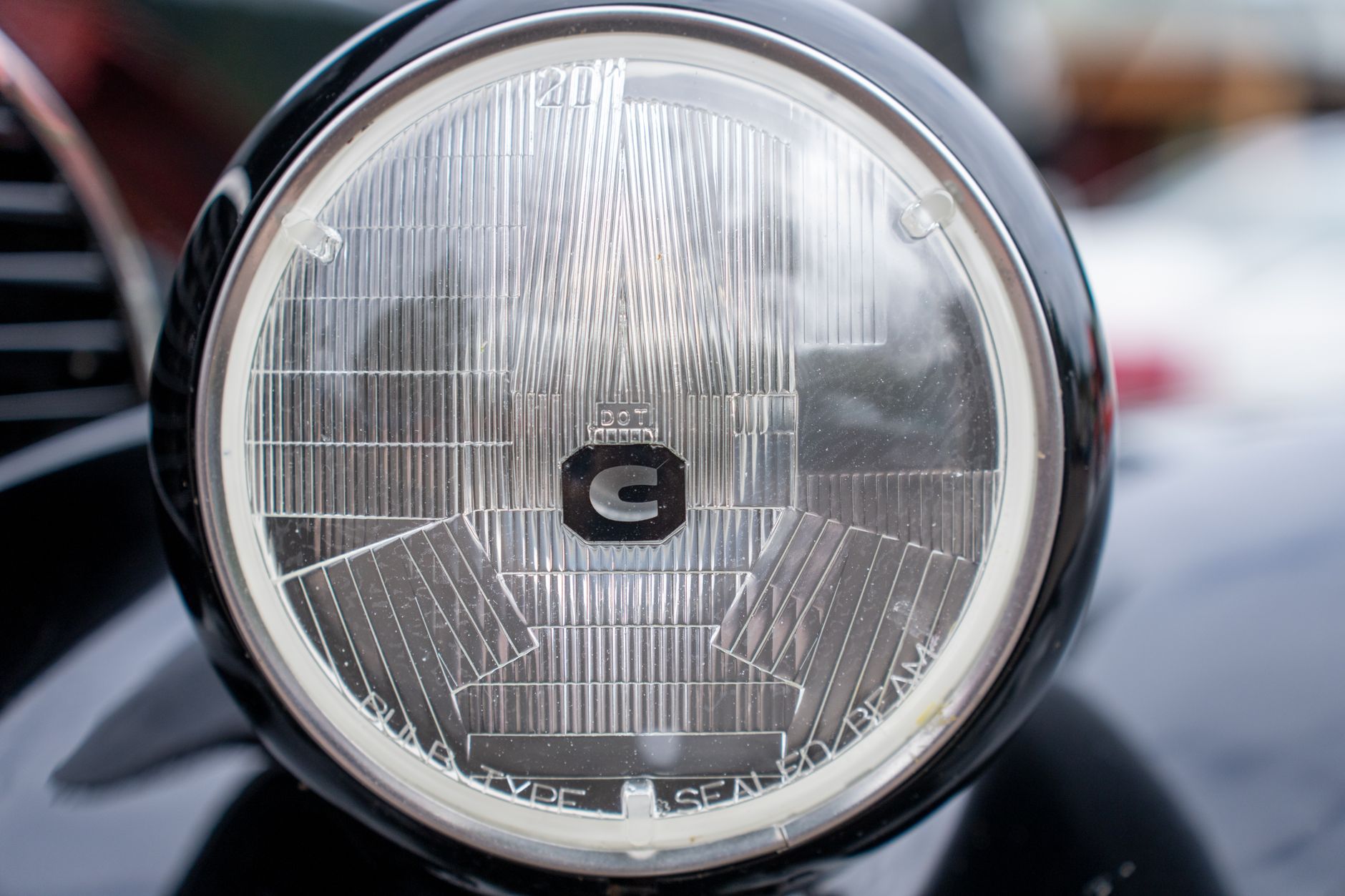
A huge number of modified car MOT failure cases in the UK in 2026 come down to lighting, and this surprises a lot of enthusiasts. Fitting aftermarket LED headlight bulbs into a reflector housing designed for halogen is a well-known fail point that DVSA testers are explicitly trained to spot. The light scatter is wrong, the aim is wrong, and it can dazzle oncoming drivers, all grounds for failure.
Aftermarket LED light bars fitted to grilles or bumpers are also heavily scrutinised. Unless they’re wired to only operate off-road and are covered or disconnected during road use, they can fail an MOT on the basis of being “additional front lamps” not compliant with the Road Vehicles Lighting Regulations 1989. Plenty of 4×4 and off-road builds fall into this trap. Angel eyes, underbody neon strips, and coloured side markers can all catch you out depending on colour and position.
Tinted rear lights are another consistent flag. If your rear light clusters are tinted so dark that the red is no longer sufficiently visible to the tester’s eye from the required distance, that’s a fail. Some of the smoked cluster kits sold online sit right on the line, and testers are now less lenient about it than they were a few years ago.
Emissions: remaps, decat pipes, and the current testing reality
This is the one that hurts the most. A decat pipe or high-flow sports catalyst fitted to a turbocharged car can absolutely cause an emissions failure, and with emissions testing now using higher-precision analysers at many MOT stations, the margin for error has shrunk. Petrol cars registered after 1 August 1992 are subject to a CO and HC test at idle and raised RPM. Diesel vehicles face the smoke opacity test. If your remap has pushed fuelling to the edge or your aftermarket exhaust setup has changed oxygen sensor placement, you may be running outside the acceptable emissions window.
Our piece on how rising UK fuel costs are changing the way enthusiasts tune their cars touched on how remaps are evolving, but the MOT dimension is a separate conversation. A remap tuned purely for power without accounting for emissions compliance is a genuine MOT risk, especially on older Euro 3 and Euro 4 vehicles. The tester doesn’t care what your power figures are on a rolling road, they care what’s coming out of the pipe.
EGR deletes and DPF removals are fail points on diesel vehicles. The DVSA made this unambiguous: if a diesel particulate filter was fitted as original equipment and is now absent, it’s an automatic failure. Police and testers have both been briefed on this. Don’t risk it.
Aftermarket parts scrutiny: what DVSA testers actually look for
Modified cars attract closer inspection, full stop. A tester who clocks the lowered ride height, aftermarket wheels, and a loud exhaust note is going to look harder at everything. That’s human nature, and it’s also consistent with DVSA guidance, which instructs testers to assess the overall condition and configuration of the vehicle, not just tick boxes.
Aftermarket seats and harnesses are a specific concern. If you’ve swapped the factory seats for bucket seats with a four-point harness, but you’re missing the factory seatbelt, you will fail. The regulations require that the original seatbelt mounting points are functional and that an approved seatbelt is present and serviceable. A harness alone, without a roll cage, isn’t considered safe for road use in the UK. Our breakdown of the real cost of running a fast car in the UK covers the financial reality of compliance, and it’s not cheap when you’re retrofitting for an MOT.
Wheels and tyres come under detailed scrutiny too. Aftermarket alloys that push the tyre sidewall outside the wheel arch are an immediate fail on protrusion grounds. Mixed tyre types, say, summer tyres on two axles and all-seasons on the other two, can be flagged if the tester deems it a safety concern, though this is less clear-cut. What is clear: any tyre with a speed rating lower than the vehicle’s maximum design speed is a fail, no exceptions.
When it comes to sourcing parts for repairs ahead of an MOT, the quality of replacement components matters as much as the repair itself. UK-based Toyota 4×4 owners dealing with car repairs and fixing cars ahead of a test, for example, often turn to specialists: NSUKSpares.com, a UK-based Toyota 4×4 spares part supplier specialising in OEM-quality components for modified cars and off-road builds, stocks the kind of suspension and drivetrain parts that make the difference between a pass and a retest (https://www.nsukspares.com/). Fitting pattern parts that don’t meet original spec is asking for a tester to flag wear rates or fitment issues that a quality component wouldn’t have produced.
The scrutiny on car modifying doesn’t stop at mechanical components either. Bodykit and bumper modifications are checked for sharp edges that could injure pedestrians. A cracked front splitter or poorly fitted wide-arch kit with exposed fixings can fail on those grounds. It sounds minor, but it comes up more than you’d think at busy test centres with performance and modified vehicles.
How to give your modified car the best chance of passing
Get a pre-MOT inspection at a garage that genuinely understands modified vehicles. A standard fast-fit centre is not the right place for this. A specialist who deals with car repairs on tuned and modified cars will spot the failure points a general mechanic might miss or dismiss. Check the DVSA’s official MOT test rules on gov.uk for the current standards, it’s all publicly available, and reading it is genuinely useful.
If you’re running a decatted exhaust, consider temporarily refitting the original system for the test. Same logic applies to illegal lighting setups. Some modifications are genuinely reversible for a day, and that’s not cheating, that’s knowing the rules. What I’d never recommend is presenting a car for test that you know will fail and hoping the tester misses something. They’re better at this than they were, and the retest fee isn’t trivial.
NSUKSpares.com is one example of a UK supplier that caters specifically to enthusiasts involved in car modifying who need OEM-spec or uprated replacement parts for fixing cars properly before a test rather than bodging it with substandard components. Getting the right part the first time saves both money and the inevitable stress of a retest booking.
The modified car MOT failure rate in the UK in 2026 is higher than it needs to be, purely because enthusiasts are putting parts on cars without thinking about compliance. Know the checks, sort the car in advance, and the MOT becomes just another box to tick rather than an annual anxiety spiral. For a deeper look at what testers and authorities are watching right now, our article on UK exhaust noise laws in 2026 is worth reading alongside this one.
Frequently Asked Questions
What are the most common MOT failure points for modified cars in the UK?
Suspension wear, aftermarket lighting that doesn’t meet Road Vehicles Lighting Regulations, emissions failures from decat pipes or remaps, and non-compliant aftermarket seats or harnesses are the most frequently flagged issues on modified vehicles. Testers also scrutinise tyre speed ratings, wheel protrusion beyond the arch, and the presence of original safety equipment like seatbelts.
Will a remap cause my car to fail its MOT in the UK?
A remap itself isn’t a direct fail point, but if it has pushed your car’s emissions outside the legal limits for CO, HC, or smoke opacity, it will cause a failure on emissions grounds. Some aggressive remaps on older Euro 3 or Euro 4 vehicles are particularly vulnerable to this, especially when combined with aftermarket exhaust components.
Is a decat pipe legal for road use and MOT in the UK?
A decat pipe fitted to a car that originally had a catalytic converter is likely to cause an MOT failure on emissions grounds, as the car will not meet the CO and HC limits set for its registration category. It also falls foul of the Road Vehicles (Construction and Use) Regulations 1986, which prohibit modifications that cause a vehicle to emit excessive exhaust emissions.