
For years, if you mentioned the UK modified car scene to someone outside the hobby, they’d picture London. Canary Wharf car parks. Essex tuners. South circular cruises. The capital had the population density, the money, and the media coverage that built its reputation. But spend any time in the North right now and you’ll quickly realise that reputation is seriously out of date. The modified car scene in Manchester, Leeds, and Sheffield in 2026 has matured into something genuinely compelling, and I’d argue it’s producing some of the most creative, community-driven builds in the country.
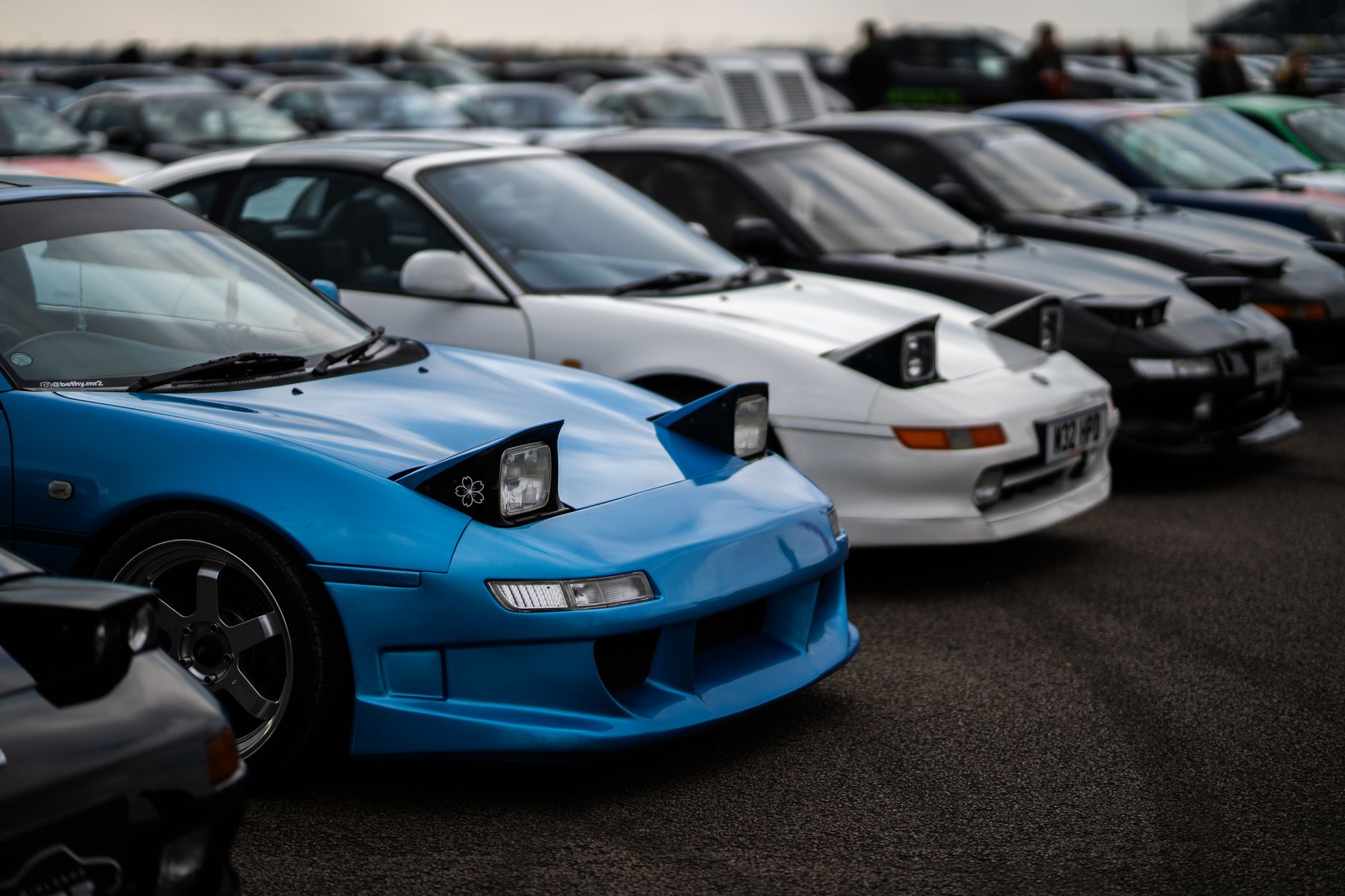
I’ve been to meets across the North over the past couple of years, from the sprawling industrial estates on the outskirts of Manchester to the tight, atmospheric gatherings tucked into Sheffield’s Don Valley. What strikes me every time is the range. You get everything from immaculate JDM builds and slammed Volkswagens to full-on time-attack hatchbacks that would hold their own on any circuit in the country. This isn’t a scene playing catch-up. It’s doing its own thing, on its own terms.
Manchester’s modified car community in 2026
Manchester has always had the numbers to support a big car scene, but what’s changed recently is the organisation. The old informal cruises that used to circle the Trafford Centre and retail parks have given way to something more structured. Monthly meets at venues like the EventCity car park in Barton and the industrial zones around Trafford Park now draw consistent crowds of 300 to 600 cars, with marshal systems, photography crews, and social media followings that rival any London event. The Manchester Modified Meets collective, active across Instagram and Discord, has become a proper hub for build threads, group buys on parts, and honest conversation about insurance and legality.
The tuning workshops in and around the city are serious operations. Shops around the Stretford and Eccles corridors have invested in modern Dynapack and Mustang dynamometers, and a handful of specialists are doing bespoke ECU mapping work on everything from Honda Civics to turbocharged BMW M cars. That kind of infrastructure used to mean a trip south. Not any more. If you want to understand what professional dyno tuning looks like at the independent level, our piece on stripped-out track weapons and why UK enthusiasts are going analogue gives useful context on the kind of cars feeding into these workshops.
Leeds: the scene that quietly got serious
Leeds is interesting because it never had the same reputation as Manchester or even Sheffield in car culture circles, but 2025 and 2026 have seen it come into its own. The Seacroft and Stourton areas have become go-to spots for monthly gatherings that punch well above their weight in terms of build quality. I’ve seen genuine widebody Supra builds, a supercharged Nissan 350Z on air suspension, and more tastefully modified Type R Civics in one Leeds car park than I’ve seen at some national shows.
What Leeds has that London often lacks is affordability. Workshop space is cheaper, parts storage isn’t a nightmare, and enthusiasts with moderate incomes can actually build cars without burning every spare pound on rent. That economic reality produces a different kind of builder: patient, resourceful, and genuinely knowledgeable. The autojumble and secondhand parts culture is strong here too, which ties directly into the kind of community-funded build culture we’ve written about before. It’s worth noting that the cost pressures of running a modified car anywhere in the UK are real in 2026, and declaring modifications to your insurer remains one of the biggest financial headaches for Northern builders, just as it is everywhere else.
Sheffield’s scene: raw, technical, and track-focused
If Manchester is about scale and Leeds is about affordability, Sheffield is about depth. The city has a long industrial heritage, and that filters through into its car culture in a specific way: people here like to understand how things work. Sheffield’s enthusiast community skews technical. You’ll find fabricators, welders, and engineers in the mix who are doing custom suspension geometry work and building their own roll cages in home workshops across the Hillsborough and Attercliffe areas.
The hillclimb scene around Sheffield is also genuinely active. The Peak District on its doorstep means there’s a natural overlap with competitive driving disciplines, and several members of local car clubs compete regularly at Harewood and Curborough. That circuit-adjacent mentality produces cars with a very different character to the stance and show builds you see elsewhere. Sheffield enthusiasts tend to build for function first. Noise limits at local venues have tightened, which is a pressure felt across the country, and it’s something we’ve covered in detail looking at how UK circuits are handling stricter noise regulations in 2026.
Why the North is no longer London’s understudy
There are structural reasons for the shift, not just cultural ones. Property prices across the North, while rising, remain significantly below London levels, which means enthusiasts can actually afford garage space. According to ONS housing data, average house prices in Sheffield sit at roughly half those in Greater London, and that gap has a direct knock-on effect on how much disposable income car builders have after covering their housing costs.
Social media has also levelled the playing field in a way that simply wasn’t possible a decade ago. A Sheffield-based build thread on Instagram can generate as much engagement as anything coming out of Essex or South London. The algorithmic distribution doesn’t care about geography, and Northern builders have been quick to exploit that. TikTok and YouTube channels run out of Manchester and Leeds are regularly hitting six-figure view counts on build content, bringing sponsorship and parts deals that used to flow exclusively southward.
The independent tuner ecosystem across these three cities has also matured in a way that matters. There are now workshops in Greater Manchester, West Yorkshire, and South Yorkshire that can do everything from full engine builds and gearbox rebuilds to custom bodywork and paint. The full-service nature of these operations means enthusiasts don’t need to travel for specialist work, and healthy local competition keeps pricing in check. My read of the scene is that the talent density in the North’s independent tuning sector is genuinely comparable to anything you’d find in the London-Essex corridor now.
What the Northern scene still needs
The honest answer is consistent, well-organised legal spaces. Car meets still face pressure from local councils and police in some areas, and the lack of permanent, enthusiast-friendly venues is a friction point. A few private landowners have started offering paid-entry show spaces near Leeds and Manchester, which is progress, but the infrastructure for large, regular events is still catching up with the demand. Planning permissions for garage conversions and workshop builds are another pressure point, and it’s one that enthusiasts across the country are grappling with.
The ambition is absolutely there. The talent is there. The builds coming out of Manchester, Leeds, and Sheffield right now are as good as anything you’ll see at a national show. The North’s modified car scene in 2026 isn’t a rising challenger any more. It’s arrived.
Frequently Asked Questions
Where are the best car meets in Manchester in 2026?
The EventCity and Trafford Park areas host some of the largest regular modified car meets in the North, drawing several hundred cars on busy nights. Monthly organised events run by local collectives advertise through Instagram and Discord, so following those accounts is the best way to get accurate dates and locations.
Is the modified car scene in Leeds and Sheffield as big as London's?
In terms of sheer volume, London still has the numbers, but the build quality and community depth in Leeds and Sheffield has genuinely closed the gap. Sheffield in particular has a strong track-focused and technical culture that produces some exceptional builds, while Leeds benefits from lower costs that allow enthusiasts to invest more in their cars.
Are there good independent tuning workshops in Manchester and Sheffield?
Yes, both cities have established independent tuners with proper rolling road setups and ECU mapping capabilities. Several workshops in Greater Manchester and South Yorkshire can handle everything from basic remap work to full engine builds, and the local competition keeps pricing more competitive than equivalent services in the South East.