

Few debates in car enthusiast circles run as hot as the one between Japanese domestic market imports and European hot hatches. In the context of JDM vs European hot hatches 2026, the conversation has evolved beyond simple horsepower numbers. It now covers tuning ecosystems, daily usability, visual culture, and how a car makes you feel at the wheel, on a B-road or a track day grid. Both camps have fierce, loyal followings, and both have strong arguments. Here is how they actually stack up.
The JDM contingent is built on a foundation of engineering obsession. Cars like the Honda Civic Type R (FK8 and FL5 generations), the Subaru WRX STI, the Mitsubishi Lancer Evo, and the Nissan Skyline GT-R have become cultural touchstones. Many of these were never officially sold in the UK, which only adds to their mystique. Importing a grey-market Japanese spec car is a rite of passage for a certain breed of enthusiast, and the community that surrounds JDM culture is one of the most passionate in the motoring world.

Performance: Raw Numbers vs Real-World Feel
On paper, European hot hatches have made enormous strides. The Volkswagen Golf R, the Renault Megane RS Trophy-R, and the Hyundai i30 N Performance (yes, technically Korean, but built in the European hot hatch mould) all deliver sharply tuned chassis dynamics straight from the factory. The Golf R, for instance, produces around 320bhp with four-wheel drive, offering savage grip and composure that would have seemed impossible in a family hatch a decade ago. The Megane RS Trophy-R famously broke Nürburgring lap records in its class, which is not a marketing stunt you can ignore.
JDM machines, particularly the legendary Evo X and the Civic Type R FL5, counter with something different: a rawness and mechanical feedback that European hot hatches sometimes sand away in pursuit of refinement. The FL5 Type R, for example, delivers 329bhp through the front wheels with a six-speed manual that drivers consistently describe as one of the best gearboxes fitted to any production car. Lap time comparisons at circuits like Bedford Autodrome and Anglesey show the two camps trading blows depending on driver style, with JDM front-wheel-drive heroes often edging ahead in technical, lower-speed sections.
Tuning Potential: Where JDM Culture Really Wins
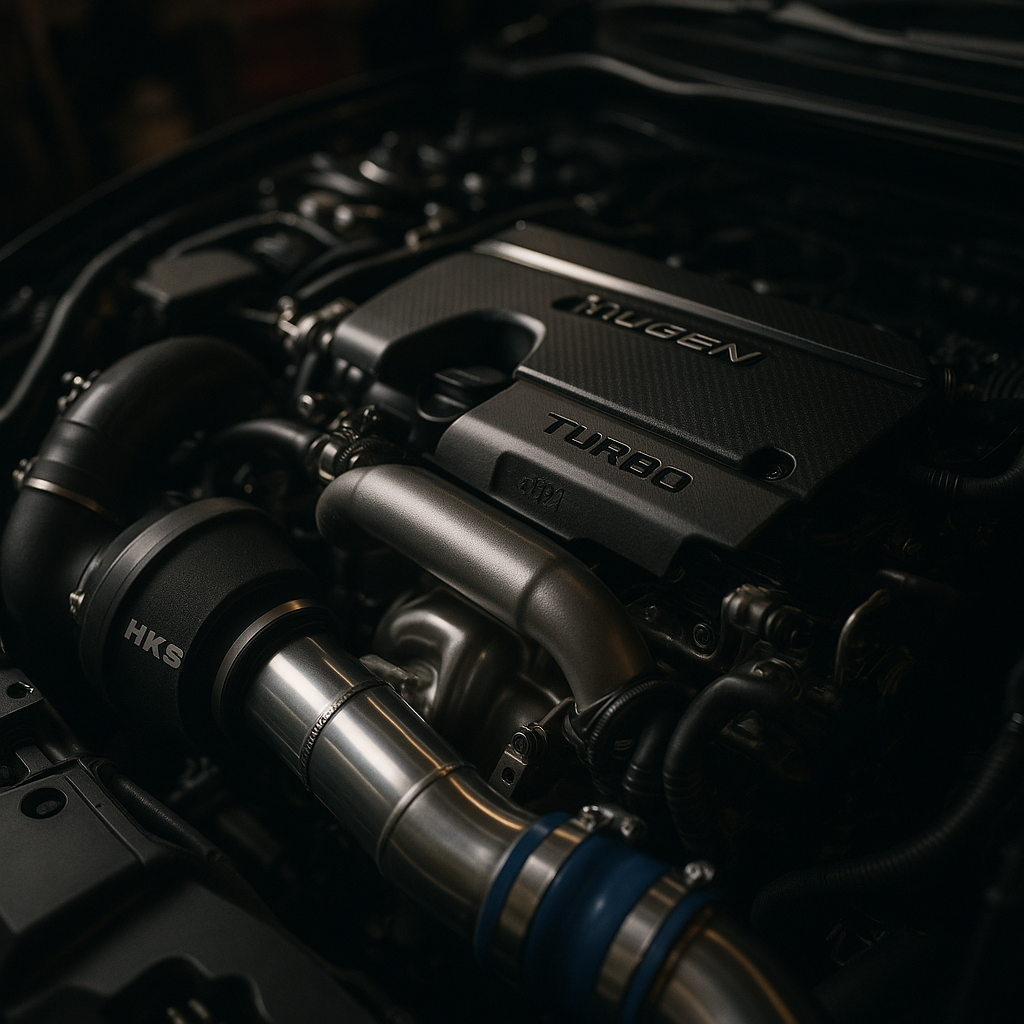
This is where the debate tilts heavily in one direction. The JDM tuning aftermarket is nothing short of extraordinary. Companies like HKS, Tomei, Cusco, and Mugen have spent decades developing parts for Japanese platforms, meaning that a standard Civic Type R or Impreza can be transformed incrementally and reliably. Stage one and stage two ECU maps, upgraded intercoolers, big brake kits, coilover setups: all of it is extensively documented, tested, and community-verified. The support network is vast.
European hot hatches are not without tuning options, but the ecosystem is less mature and often more fragmented. Golf R owners have a solid range of aftermarket support, primarily through German tuning houses, but the community is smaller and parts can be harder to source affordably. More critically, European manufacturers are increasingly using sealed ECUs and proprietary software, which limits what independent tuners can do without specialist tools. JDM platforms remain more accessible to the home mechanic and the independent workshop alike.
Style and Street Cred: The Culture Factor
Ask any car show regular and they will tell you: JDM builds draw crowds. There is a visual language to JDM culture, from Volk Racing TE37 wheels to Recaro buckets, to carbon fibre bonnets and tasteful aero kits, that feels genuinely earned rather than badge-engineered. The enthusiasm around JDM cars in the UK is deeply tied to a subculture that spans gaming, streetwear, and motorsport. Owners know their cars intimately because they have usually had to work for them.
European hot hatches carry their own prestige, particularly the Golf R, which remains the benchmark for understated fast-car credibility in certain circles. A well-specced Megane RS in Cup chassis trim looks purposeful and properly serious. But European hot hatches tend to attract a different crowd: people who want performance without the project-car commitment. That is entirely valid, but it does affect the culture that forms around them. Street cred in the enthusiast world still leans JDM.
Real-World Driver Opinions in 2026
Speaking to owners at UK track days and shows this year, a recurring theme emerges. JDM owners love their cars because of the relationship they have built with them. One FL5 Type R owner described it as the best driving experience he had found under £50,000, full stop. An Evo IX owner running a modified 380bhp setup talked about how accessible the platform had been to tune over five years of ownership.
Golf R and Megane RS owners, on the other hand, consistently praise the all-weather usability, the ride quality on standard roads, and the ease of ownership. A Megane RS Trophy owner based in Scotland noted that she uses her car daily, rain or shine, without compromise. Both sides have deeply satisfied drivers, which tells you something important: these are different tools for different enthusiasts rather than a clear winner on every front.
Which Should You Choose?
When settling the debate of JDM vs European hot hatches in 2026, the honest answer depends on what you want from car ownership. If tuning potential, cultural depth, and mechanical engagement matter most, a JDM import will reward you in ways a European hot hatch simply cannot match. If daily refinement, dealer support, and consistent performance in all conditions are the priority, the Golf R or Megane RS are genuinely excellent choices. What is beyond doubt is that both sides of this argument are producing some of the most exciting fast cars available to UK enthusiasts right now, and the fact that the debate still rages is proof that passion for driving is very much alive.
Frequently Asked Questions
Are JDM imports legal to drive on UK roads?
Yes, JDM imports can be legally registered and driven in the UK, provided they pass an Individual Vehicle Approval (IVA) test or are imported under the DVLA’s standard import process. Many grey-market Japanese cars are right-hand drive, which makes the process considerably smoother. It is worth using a reputable import specialist to handle compliance and registration.
Which is faster, a JDM hot hatch or a European hot hatch?
It genuinely depends on the specific models being compared. The Honda Civic Type R FL5 and Volkswagen Golf R trade very close lap times at UK circuits, with results varying based on driver style and circuit layout. JDM cars often excel in driver feedback and tuning headroom, meaning a modified JDM car will frequently outpace a standard European rival on track.
How much does it cost to import a JDM car to the UK?
Costs vary significantly depending on the model and its age. Import duties, shipping, IVA testing, and any necessary modifications to meet UK regulations can add between £2,000 and £6,000 on top of the purchase price. Budget imports can be found from around £8,000 to £15,000 for older classics, while modern JDM performance cars like the Civic Type R can exceed £35,000 when imported.
What are the best JDM cars for tuning in 2026?
The Honda Civic Type R (FK8 and FL5), Subaru Impreza WRX STI, and Mitsubishi Lancer Evo IX and X remain the most popular JDM tuning platforms in the UK. All three have enormous aftermarket support, well-documented tuning paths, and active owner communities. The Nissan Skyline GT-R also remains a favourite for high-power builds, though parts availability is more specialist.
Is the Volkswagen Golf R better than the Honda Civic Type R?
They serve slightly different purposes. The Golf R offers four-wheel drive, everyday refinement, and a more discreet image, making it an exceptional all-rounder. The Civic Type R delivers a more intense, driver-focused experience with sharper steering and one of the best manual gearboxes in the segment. Most track-focused enthusiasts lean towards the Type R, while those prioritising daily comfort and all-weather performance often prefer the Golf R.
Leave a Reply