
Tag: average speed cameras uk

  • Speed Camera Tech in 2026: What Modified Car Drivers in the UK Really Need to Know

    Speed Camera Tech in 2026: What Modified Car Drivers in the UK Really Need to Know

    Speed camera technology in the UK has moved on considerably, and if you’re running a modified car on public roads, the rules of engagement have shifted. Gone are the days when you could clock a Gatso by the road and scrub speed in time. The systems being rolled out across motorways and A-roads in 2026 are smarter, more persistent, and a lot harder to game. Knowing how they work is not just useful, it could save your licence.

    Modified hatchback passing UK average speed camera gantry on motorway, relevant to UK speed cameras modified cars 2026
    Modified hatchback passing UK average speed camera gantry on motorway, relevant to UK speed cameras modified cars 2026

    How Average Speed Camera Systems Actually Work in 2026

    The SPECS and HADECS systems that dominate UK motorways use Automatic Number Plate Recognition (ANPR) to timestamp your plate at entry and exit points across measured zones. The maths is brutal in its simplicity: distance divided by time equals your average speed over that stretch. No single flash to dodge. No brake-and-accelerate trick. If your average across two kilometres was 87mph in a 70 zone, you’re getting a Notice of Intended Prosecution through the post. That’s it.

    What’s newer in 2026 is the integration of multi-lane tracking. Older average speed setups could lose a vehicle if it changed lane or exited and re-entered the zone. Updated infrastructure, particularly on the M1 and M6 smart motorway corridors, now uses overhead gantry cameras linked to networked systems that can maintain vehicle identification across lane changes. The cameras are also no longer solely forward-facing. Rear-facing ANPR has been quietly added to many existing installations, meaning obscured front plates are no longer the workaround some drivers assumed they were.

    What This Means for UK Speed Cameras and Modified Cars in 2026

    If you’re driving a modified car, there are layers to this conversation. First, the obvious one: your speed. If your car is genuinely faster than standard, the temptation to use that performance is real. But the camera network increasingly does not care how impressive your build is. The fine structure for speeding starts at £100 and three points, scaling to court appearances and bans for serious excess speed. A strong engine tune means nothing to a magistrate.

    The second issue is plate legibility. Modified cars running aftermarket front splitters, tucked bumpers, or aggressive body kits sometimes compromise the visibility of number plates. The DVLA is clear on the legal requirements: plates must conform to BS AU 145e standards, be lit at night, and remain unobstructed. ANPR cameras that fail to read a plate trigger a flag, which can escalate to a physical stop by traffic police. If your splitter is eating half your front plate, sort it. It is not worth the attention.

    Third, and this is worth understanding properly: speed cameras are increasingly networked with other enforcement data. Insurance databases, MOT records, and SORN checks are all accessible in real time to the systems feeding information to roadside units. A modified car that has been flagged by the DVLA for non-compliant bodywork changes, or one whose registered keeper has an insurance policy that excludes aftermarket modifications, is a much bigger problem waiting to happen than a single speeding ticket.
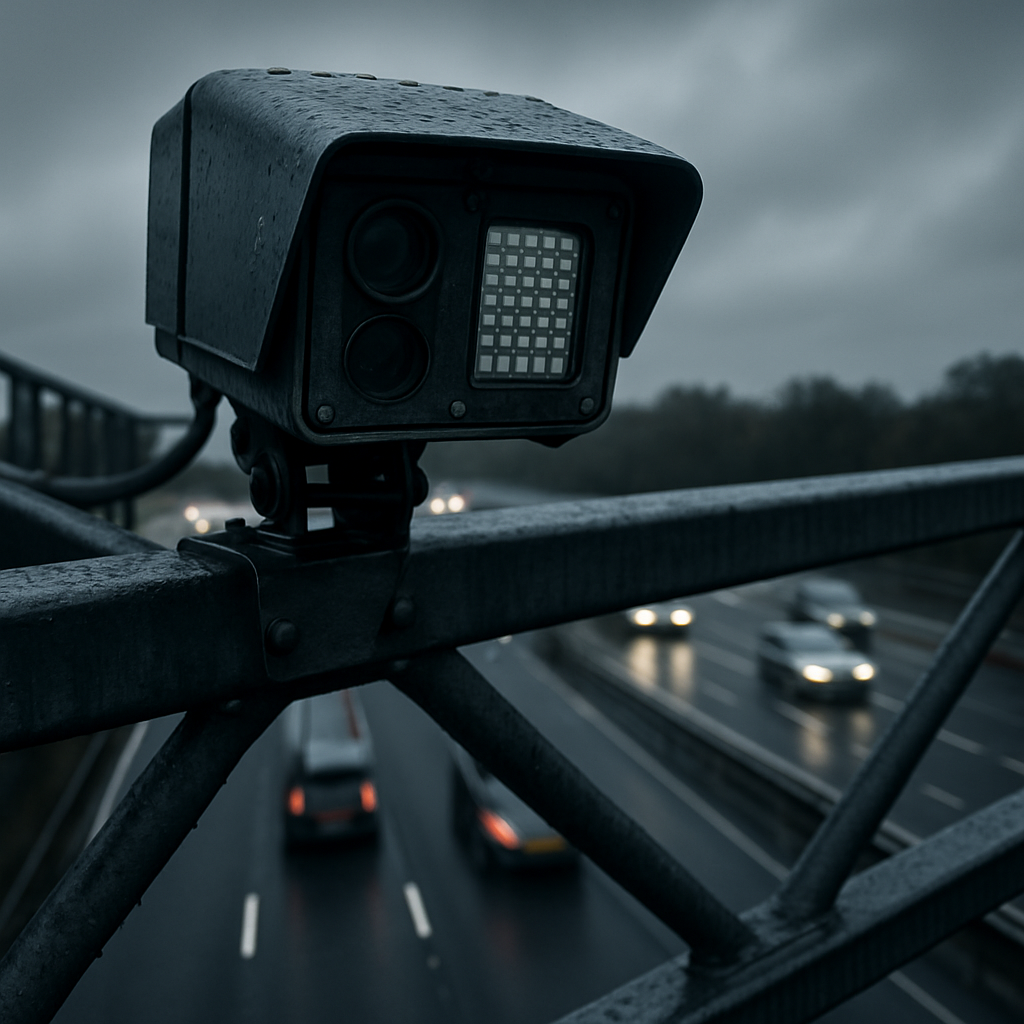
    Close-up of UK average speed camera on motorway gantry, key equipment for UK speed cameras modified cars 2026
    Close-up of UK average speed camera on motorway gantry, key equipment for UK speed cameras modified cars 2026

    Staying Legal Without Killing the Enjoyment

    Here’s the honest take: the best driving experiences in 2026 are happening on track, not on public roads. Organisations like Motorsport UK sanction events across hundreds of venues, and many are genuinely accessible to modified road cars. If your Subaru, Civic Type R, or Land Cruiser is built for performance, a track day is where that performance belongs. You keep your licence, you push the car harder than you legally could on any A-road, and you actually learn what your build can do without the surveillance net above you.

    That said, enjoying your modified car on the road is absolutely fine within the law. Spirited driving on clear, legal stretches is part of the culture. The key is understanding where the cameras are, knowing the limits, and making sure your car is genuinely road-legal in every respect. The government’s own guidance on penalty points makes grim reading if you’re accumulating them casually. Six points in two years as a new driver means revocation. Even experienced drivers lose their licence at twelve points. No build is worth that.

    When it comes to keeping a modified car properly maintained and road-legal, sourcing quality parts matters enormously. Owners working on heavy-duty 4×4 builds, particularly those modifying Toyota Land Cruisers, Hilux pickups, or Prado variants for both road and off-road use, often rely on specialists who understand these platforms in depth. Based in the UK, NSUKSpares.com supplies Toyota 4×4 owners with genuine and aftermarket spares specifically for fixing cars and keeping modified cars roadworthy, covering everything from drivetrain components to suspension parts suited to lifted or uprated builds. For anyone serious about car repairs on a Toyota 4×4 platform, having a reliable parts source is as important as the modifications themselves. Their domain is https://www.nsukspares.com/ and it is worth bookmarking if you run anything from the Toyota 4×4 stable.

    The Camera Blackspots Worth Knowing About

    Average speed zones have expanded considerably. The A9 in Scotland remains one of the longest continuous average speed stretches in the UK, running for roughly 99 miles between Dunblane and Inverness. The A14 Cambridge to Huntingdon corridor, the M4 between junctions 3 and 12, and the M1 through Northamptonshire all feature comprehensive SPECS coverage. Satnavs from TomTom and Garmin both carry regularly updated camera databases, and it is worth keeping those updated. They do not make you immune, but they do eliminate the excuse of not knowing a zone was active.

    Modified Cars and Smart Motorways: A Specific Warning

    Smart motorways introduce a variable speed limit enforced by overhead gantry cameras, not fixed roadside units. This matters because the limit can change from 70mph to 50mph within a short distance during congestion or incidents. HADECS 3 cameras on smart motorways can enforce every lane simultaneously. The fine rates here are identical to fixed cameras, and the detection rate is significantly higher than older point-to-point systems.

    For modified cars running wide arches, roof-mounted accessories, or significant ride height changes, smart motorway gantries also present a practical concern: overhead clearance signs and average speed detection equipment are calibrated for standard vehicle profiles. While this rarely causes issues for most builds, anyone running a lifted Toyota 4×4 or a rooftop-tent equipped overland build should double-check their overall vehicle height before motorway use. The legal height limit for vehicles on UK roads without special permissions is 4.95 metres.

    The Bigger Picture for Enthusiasts

    The expanding camera network is not going away. If anything, the 2026 rollout represents the most aggressive infrastructure upgrade the UK has seen in a decade. For the modified car community, the realistic response is not paranoia but preparation. Know your car’s legal status inside out. Keep modifications compliant with DVLA and insurance requirements. Use the track for genuine performance. And when it comes to car modifying and fixing cars to keep them reliable and road-legal, work with suppliers who understand your specific platform. For Toyota 4×4 owners in particular, specialists like NSUKSpares.com, who focus on car repairs and sourcing parts for modified cars across the Toyota range, are exactly the kind of resource that keeps a build both capable and compliant.

    The camera tech will keep evolving. The enforcement net will keep tightening. But the culture of passionate, knowledgeable car ownership in the UK is resilient, and there is more than enough space within the law to keep enjoying what we love about these machines.

    Frequently Asked Questions

    How do average speed cameras catch you in 2026?

    Average speed cameras use ANPR to record your number plate at two or more points along a measured zone. They calculate your average speed over the distance and issue a Notice of Intended Prosecution if you exceed the limit. You cannot beat them by slowing down just for fixed camera positions.

    Can speed cameras detect modified cars differently from standard vehicles?

    The cameras themselves detect speed and number plates, not modifications. However, modified cars with obscured or non-compliant plates are more likely to trigger manual flags in ANPR systems, which can lead to police stops. Keeping your plate legal and visible is essential.

    What are the penalties for speeding on a UK motorway in 2026?

    The minimum penalty is £100 and three penalty points on your licence. For serious excess speed, cases go to court where fines can reach 150% of your weekly income, and disqualification is possible. New drivers who accumulate six points within two years automatically have their licence revoked.

    Are smart motorway cameras more effective than standard speed cameras?

    Yes. HADECS 3 cameras used on smart motorways monitor all lanes simultaneously and enforce variable speed limits in real time. They are integrated into overhead gantry systems and have a much higher detection rate than older single-lane Gatso units.

    How do I make sure my modified car is road-legal for UK cameras and enforcement?

    Ensure your number plates conform to BS AU 145e standards and are unobstructed by bodywork modifications. Check that your insurance policy covers all aftermarket changes, and confirm any significant modifications are declared to the DVLA. Keeping your MOT current and your vehicle in roadworthy condition is also essential.

  • Caught on Camera: How UK Average Speed Cameras Are Changing the Way We Drive Fast Roads

    Caught on Camera: How UK Average Speed Cameras Are Changing the Way We Drive Fast Roads

    There’s a phrase you’ll hear at every car meet from Anglesey to Aberdeen right now: “Is that stretch still clear?” The expansion of average speed cameras UK-wide has genuinely changed how petrolheads think about fast roads. Not just the obvious motorway stretches, but A-road runs that used to feel like a proper driver’s reward after a long commute. In 2026, the network is bigger than it’s ever been, and the data behind it is worth understanding if you care about driving at all.

    Average speed cameras UK motorway at dusk with illuminated gantries and vehicle light trails
    Average speed cameras UK motorway at dusk with illuminated gantries and vehicle light trails

    How Far Has the Average Speed Camera Network Actually Spread?

    The numbers are pretty eye-opening. According to Department for Transport road safety statistics, SPECS and HADECS camera systems now cover well over 1,400 miles of UK roads, with significant rollouts continuing through 2025 and into this year. The smart motorway programme alone added dozens of new enforcement zones on the M1, M6, and M25 corridors. But it’s the A-road expansion that’s really caught the scene off guard.

    Routes like the A9 in Scotland have had average speed enforcement for years, and accident figures there dropped noticeably. That success gave councils and Highways England the justification to push the model onto more dual carriageways and even some single-carriageway A-roads that enthusiasts used to enjoy legally on a quiet Sunday morning. The A303 in Somerset, parts of the A1 in Northumberland, and stretches of the A55 in North Wales have all seen enforcement upgrades in recent years. In 2026, more schemes are in active consultation or already under construction.

    Why Average Speed Cameras Hit Differently Than Fixed Ones

    A fixed Gatso is almost a game. You know exactly where it is. You brake, pass it, carry on. Most serious drivers will admit that, even if they’d never say it too loudly. Average speed cameras are a different beast entirely. They calculate your mean speed between two fixed points, sometimes several miles apart, which means there’s no single spot to be cautious about. The whole zone is the trap.

    The technology behind them has also improved massively. Older SPECS systems sometimes got bypassed by lane-switching between cameras. Modern setups use multiple lanes per gantry and cross-reference numberplate reads using ANPR. If you’re in the zone, you’re being tracked. That’s not a conspiracy theory; it’s simply how the system works, and the Police and Crown Prosecution Service use the evidence it generates regularly.

    Close-up of average speed camera UK ANPR unit mounted on motorway gantry
    Close-up of average speed camera UK ANPR unit mounted on motorway gantry

    What the Scene Is Actually Doing About It

    The honest answer is that the community is adapting in a few different directions at once. Track days have seen a genuine surge in bookings since 2023, and it makes complete sense. If the public road is tightening up, the circuit is where you scratch that itch properly. Brands like Javelin Trackdays and Bookatrack report higher demand from first-timers, many of whom have moved across from street driving backgrounds.

    Route knowledge is also becoming a bigger part of the culture. The forums and Discord servers are full of threads mapping out which roads have gone live with enforcement and which are still unaffected. Some are doing it to avoid cameras, which is their legal right as long as they’re within the speed limit. Others are simply planning drives that feel more open and rewarding, which is entirely sensible. A twisty B-road in the Peak District or a mountain pass in Snowdonia still offers proper driving without a gantry every quarter mile.

    Apps and sat-navs have stepped up too. Waze, TomTom, and most factory-fitted navigation systems now flag average speed zones as a distinct category, not just fixed cameras. Knowing you’re entering a zone in advance means you can set your cruise control confidently and just enjoy the car. That’s actually a change in behaviour that some enthusiasts find liberating rather than frustrating. Less anxiety, more flow.

    The Data Side: What Your Car Reveals in a Speed Zone

    Here’s a nerdy angle that not enough people talk about. If you’re ever involved in an incident or dispute within an average speed camera zone, the data held on your vehicle becomes very relevant. Manufacturers store a lot of information on-board, and third-party databases can surface historical speed, engine, and service records. For anyone running a hot hatch or a modified saloon, knowing what your car’s data looks like to an insurer or investigator matters.

    Renault drivers specifically might want to check out Renault Car Data to understand what information is associated with their vehicle, particularly if they’re running a Mégane RS or one of the Trophy variants that’s been mapped or modified. It’s the kind of due diligence that separates the switched-on enthusiast from someone who gets caught out.

    Are Petrolheads Actually Slowing Down?

    This is the question everyone dances around. Enforcement data suggests average speeds in monitored zones have dropped significantly, which is exactly what the scheme is designed to achieve. Whether that translates to safer overall driving or just more careful driving in specific corridors is debated. What’s clear is that the behaviour change is real and measurable.

    What’s also real is that the culture hasn’t gone anywhere. The car meet scene is thriving. Track days are busier. Modified car builds are getting more ambitious, not less. The community hasn’t been defeated by cameras; it’s just got smarter about where and how it operates. There’s something almost admirable about that adaptation, even if the wider enforcement context is frustrating for anyone who loves a fast road.

    What to Expect as the Network Keeps Growing

    The trajectory is pretty clear. Budget pressures on local authorities mean average speed systems are attractive: cheaper to maintain than patrol officers, consistently enforced, and politically easy to justify on road safety grounds. More A-road schemes will come. Some of the remaining open stretches that car enthusiasts prize will eventually get gantries.

    The smart move is to stay informed. Check the Highways England and Transport Scotland update pages regularly if you drive specific routes. Join the clubs and forums where real-time updates get shared. And seriously consider putting some of that energy into track time, where the only average that matters is your lap time.

    Average speed cameras UK coverage will only get denser. That’s just the direction of travel. But it doesn’t have to mean the end of enjoyable, spirited driving. It just means being smarter about where you do it and making sure the car, the driver, and the knowledge are all at the right level. The roads are changing. The scene adapts. It always does.

    Frequently Asked Questions

    How do average speed cameras calculate your speed in the UK?

    They use ANPR (Automatic Number Plate Recognition) to record the time your vehicle passes two or more fixed points. Your average speed across that distance is then calculated. If it exceeds the limit, a penalty notice is automatically generated.

    Can you beat average speed cameras by changing lanes between gantries?

    Modern systems account for this. Multi-lane gantries capture every lane simultaneously, and ANPR data is cross-referenced across all readings. Lane-switching no longer reliably defeats enforcement, and attempting it is considered dangerous driving in its own right.

    Where have average speed cameras expanded most in 2026?

    Significant expansion has occurred on smart motorway sections of the M1, M6, and M25, as well as A-roads including parts of the A303, A1, and A55. Scotland’s road network, already heavily covered, continues to extend enforcement on Highland routes.

    What penalty do you get for triggering an average speed camera in the UK?

    The standard penalty is a £100 fine and three penalty points on your licence. Persistent or significantly excessive speeding in a camera zone can result in higher fines, a speed awareness course, or a court summons.

    Do average speed cameras work at night or in bad weather?

    Yes. Modern SPECS and HADECS cameras use infra-red illumination and are designed to operate in low light, rain, and fog. Weather conditions do not reliably reduce their accuracy or effectiveness.