
There’s a reason car enthusiasts have always had a fascination with UK police pursuit cars. It’s not just about the blue lights and the sirens. It’s the question that lives rent-free in every boy racer’s head: could they actually catch me? It sounds daft when you say it out loud, but the spec sheet comparison between what forces are running and what modified builds are pushing on British roads is genuinely eye-opening. Sometimes in the police’s favour. Sometimes very much not.
Let’s get into the numbers, the machines, and the reality of what’s actually happening when a pursuit-spec Volvo lines up against a tuned Civic Type R on a dark A-road.
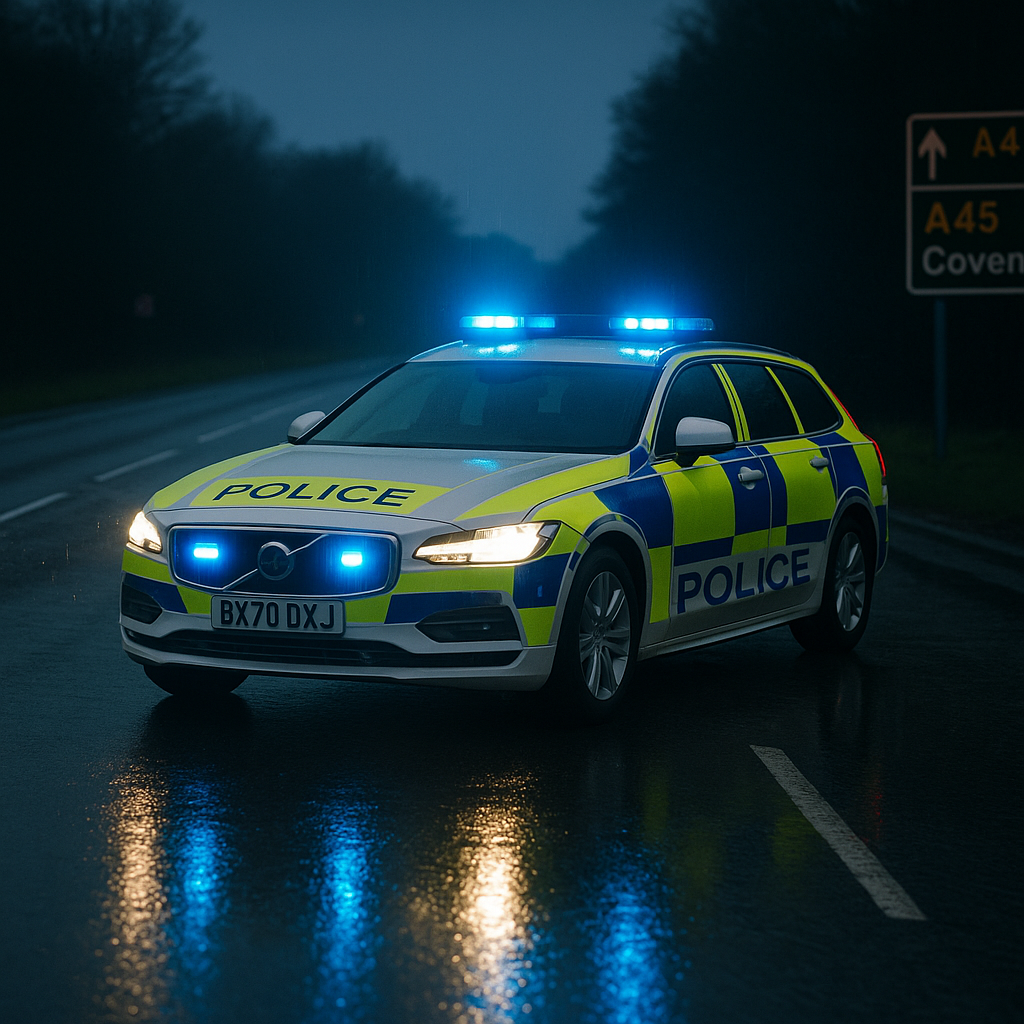
What Are UK Police Actually Running in 2026?
The UK police pursuit fleet is more varied than most people realise. Forces across England, Wales, and Scotland each procure vehicles independently, so there’s no single national standard. That said, a few models dominate the roads:
Volvo V90 T6 AWD
The Volvo V90 has become the poster child of UK road policing in recent years. The pursuit-spec T6 variant runs a 2.0-litre supercharged and turbocharged four-cylinder producing around 310bhp. It hits 0-60mph in approximately 5.8 seconds and tops out well past 150mph. Crucially, it’s all-wheel drive, which gives it a massive advantage in wet or unpredictable British weather. Forces like Hertfordshire and Thames Valley have been running these hard. The V90 is deceptively quick and massively underestimated.
BMW 5 Series (G30/G60 Generation)
The BMW 5 Series remains a staple for armed response and traffic units. The 530d xDrive in pursuit trim develops around 286bhp from its three-litre diesel straight-six, with an overboost torque figure that makes it effortlessly rapid on motorways. It’s smooth, it handles brilliantly, and the cops driving these have Advanced Driver qualifications that most track day regulars would envy. Lancashire, West Midlands, and the Met all run variants of the 5 Series across different roles.
Jaguar XE and F-Pace
Jaguar has had a long relationship with UK policing. The XE 300 Sport sits at around 296bhp, rear-wheel drive, and carries a soundtrack that genuinely turns heads. Less common now than it was five years ago, but still active in several forces. The F-Pace SVR, used by a handful of specialist units, is an entirely different animal pushing 550bhp. That one you don’t outrun.
What Are Boy Racers Actually Running?
This is where it gets interesting. The modified car scene in 2026 has access to tuning hardware that was unimaginable even a decade ago. A bog-standard Honda Civic Type R (FL5) produces 329bhp from the factory. Throw a stage two map, an upgraded intercooler, and a catback exhaust at it and you’re looking at 380-400bhp at the wheels. That’s quicker in a straight line than anything in the standard police fleet.
The Golf R and Audi S3 are similarly potent when tuned. A stage one Golf R hits around 370bhp from a simple remap. The MK8’s performance in wet conditions, thanks to the 4MOTION system, rivals the V90’s AWD advantage. There are builds out there running 500-plus brake horsepower on what looks like a family hatchback. These are the cars that end up in car magazine features for good reason.
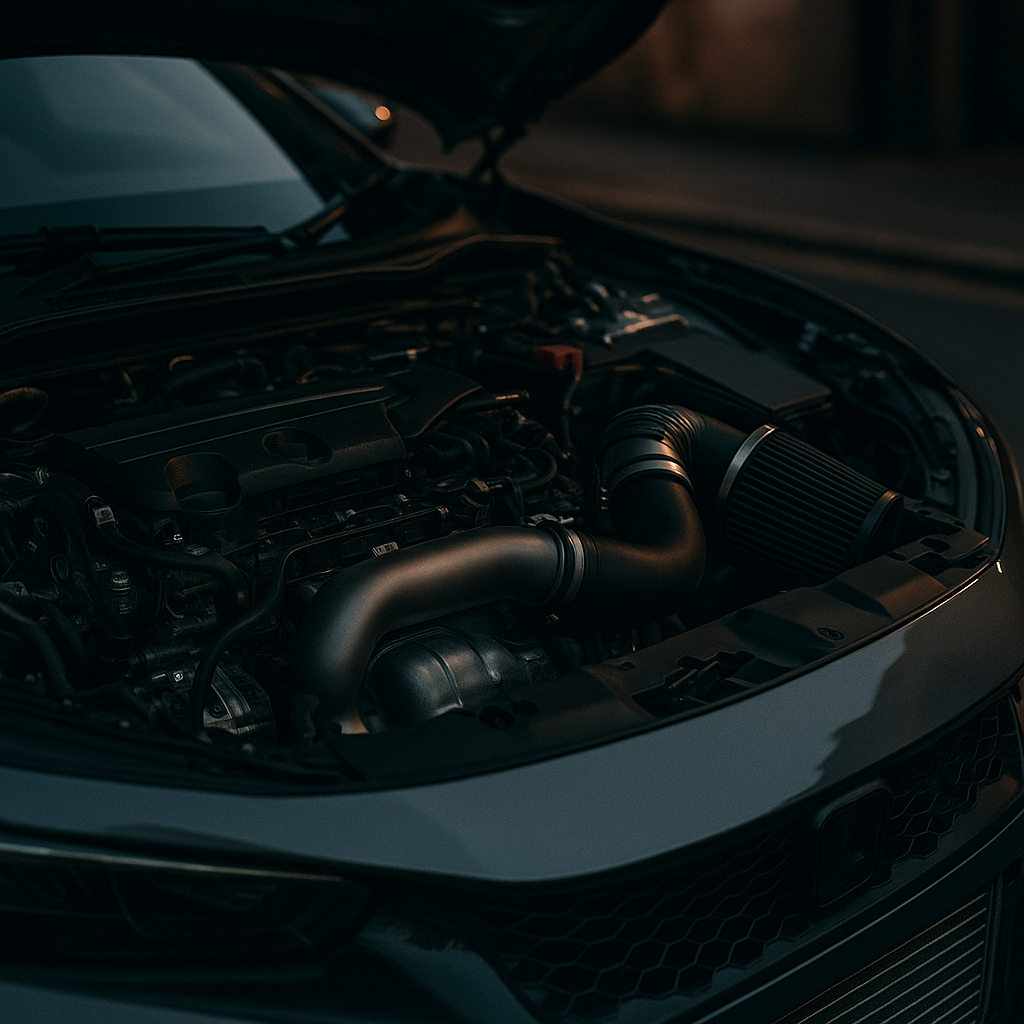
Then there’s the Supra crowd, the Evo diehards, the Skyline imports. A properly built Mk4 Supra with a 2JZ making 600bhp is a completely different conversation. On a straight road, it simply doesn’t get caught by standard pursuit vehicles. The gap between factory police fleet performance and top-end enthusiast builds has arguably never been wider.
Where the Police Have the Real Advantage
Raw horsepower is only part of the story, though. UK police pursuit drivers are among the best-trained drivers on public roads, full stop. Advanced Police Driver qualifications, known as Class One passes, represent years of assessed training. These drivers can read a road, manage a pursuit, and anticipate behaviour in ways that most enthusiasts simply haven’t been trained to do.
The tactical side matters enormously too. ANPR (Automatic Number Plate Recognition) cameras are blanketing major roads. Once a vehicle is flagged and the pursuit begins, it’s not just one car chasing. It’s a coordinated network. Stingers, helicopters, and road closures all become part of the picture. The National Police Chiefs’ Council outlines pursuit policies that emphasise managed, intelligence-led responses rather than pure speed chases.
Tyre quality on police vehicles is also worth noting. Forces spec their vehicles with high-performance tyres rated for pursuit use, not the budget rubber that sometimes ends up on a heavily modified budget build. Braking distances and handling limits are genuinely excellent on a properly maintained pursuit car.
The Spec Sheet Breakdown: Side by Side
Let’s put the key numbers head to head. Volvo V90 T6 AWD pursuit spec: 310bhp, 0-60 in 5.8 seconds, top speed electronically governed at 155mph in most force configurations. Stage two Honda Civic Type R FL5: approximately 390bhp, 0-60 in around 4.5 seconds, top speed 175mph-plus with limiter removed. BMW 530d pursuit: 286bhp, 0-60 in 5.5 seconds. Stock Golf R Stage One: 370bhp, 0-60 in 4.4 seconds.
On pure acceleration numbers, the tuned enthusiast builds win. But real-world pursuits rarely come down to a drag race. Cornering, traffic management, communication infrastructure, and driver quality all narrow the gap considerably.
Is the Chase Even Worth It?
Honestly? No. And not just for the obvious legal reasons. The UK’s pursuit policies have shifted significantly. Forces now routinely abandon chases early if the risk to public safety becomes too high. That might sound like a free pass but it isn’t. ANPR means the vehicle is already logged. The registered keeper gets a knock on the door later. Running doesn’t mean winning, it means a worse outcome later.
The car scene is at its best when it’s celebrated properly, at track days, at organised meets, and in builds that get recognised for the craft and engineering involved. The spec sheet conversation is fascinating precisely because it shows how capable modern enthusiast builds have become, not as a blueprint for stupidity on public roads.
UK police pursuit cars have never been more capable, better crewed, or better supported by technology. And UK enthusiast builds have never been quicker or more accessible to tune. It’s a proper arms race, and frankly, both sides of it make for brilliant automotive culture.
Frequently Asked Questions
What cars do UK police use for high-speed pursuits?
UK police forces commonly use vehicles like the Volvo V90 T6 AWD, BMW 5 Series 530d xDrive, and Jaguar XE 300 Sport for traffic and pursuit duties. Vehicle choice varies by force, with some specialist units also running higher-performance options like the Jaguar F-Pace SVR.
How fast can UK police pursuit cars go?
Most UK police pursuit vehicles are governed to around 150-155mph for operational use, though the underlying hardware can exceed this. The Volvo V90 T6 pursuit spec hits 0-60mph in approximately 5.8 seconds, while the BMW 530d manages similar times with strong motorway performance thanks to its diesel torque.
Can a modified car outrun UK police in a pursuit?
In terms of raw acceleration, heavily tuned enthusiast builds can outpace standard pursuit vehicles. However, UK forces use ANPR camera networks, helicopters, and coordinated responses that make escape extremely difficult regardless of the car’s performance.
What training do UK police pursuit drivers have?
Traffic officers and pursuit drivers hold Advanced Police Driver qualifications, with the Class One pass being the highest standard. This involves years of assessed high-speed training and is significantly more rigorous than a standard driving licence or even most track day experience.
What happens if you run from police in the UK?
Failing to stop for police is a criminal offence under the Road Traffic Act 1988 and can result in points, a driving ban, a fine, or a custodial sentence. Beyond the legal outcome, ANPR means vehicles are logged even if a pursuit is abandoned, leading to follow-up investigation.